EN
 FR
 DE
 IT
 PT
 ES


Floating and concurrent licences

Floating Licences and concurrent licences matter whenever a company wants to pay for simultaneous use rather than every person who might open an application one day. In expensive professional software, that difference can change the annual budget, the IT architecture and the evidence needed for compliance.
Contents
- What a floating licence is
- Floating, concurrent and network licences: the real differences
- How a licence server works
- When concurrent licences make sense
- Which software usually offers this model
- CAD, engineering and technical analysis
- Research, statistics and data
- Benefits for procurement and finance
- Legal and compliance risks
- How to calculate how many licences you need
- Checklist before buying
- Alternatives: named user, perpetual and subscription
- Where Licendi fits
What a floating licence is
What a floating licence is matters because floating licences do not assign the right to use software to one fixed person. They create a shared licence pool that is consumed when someone starts the application. A company can therefore buy fewer seats than potential users when not everyone works in the tool at the same time. This model is common in expensive, specialist or shift-based technical software.
The decisive difference from a named-user licence is simultaneity. If five people may need the application but only two use it at once, two concurrent seats can be enough, provided the contract allows that use. The licence server manages check-out and check-in, prevents overuse and creates evidence for a future software audit.
For European companies, the value is not only cost reduction. The model also reduces reactive purchases, measures real demand and forces clear ownership of administration. Before choosing it, review usage frequency, locations, remote access, the need for temporary borrowing and vendor support for the versions you plan to run.
Floating, concurrent and network licences: the real differences

Floating, concurrent and network licences: the real differences matters because floating licences do not assign the right to use software to one fixed person. They create a shared licence pool that is consumed when someone starts the application. A company can therefore buy fewer seats than potential users when not everyone works in the tool at the same time. This model is common in expensive, specialist or shift-based technical software.
The decisive difference from a named-user licence is simultaneity. If five people may need the application but only two use it at once, two concurrent seats can be enough, provided the contract allows that use. The licence server manages check-out and check-in, prevents overuse and creates evidence for a future software audit.
For European companies, the value is not only cost reduction. The model also reduces reactive purchases, measures real demand and forces clear ownership of administration. Before choosing it, review usage frequency, locations, remote access, the need for temporary borrowing and vendor support for the versions you plan to run.
How a licence server works
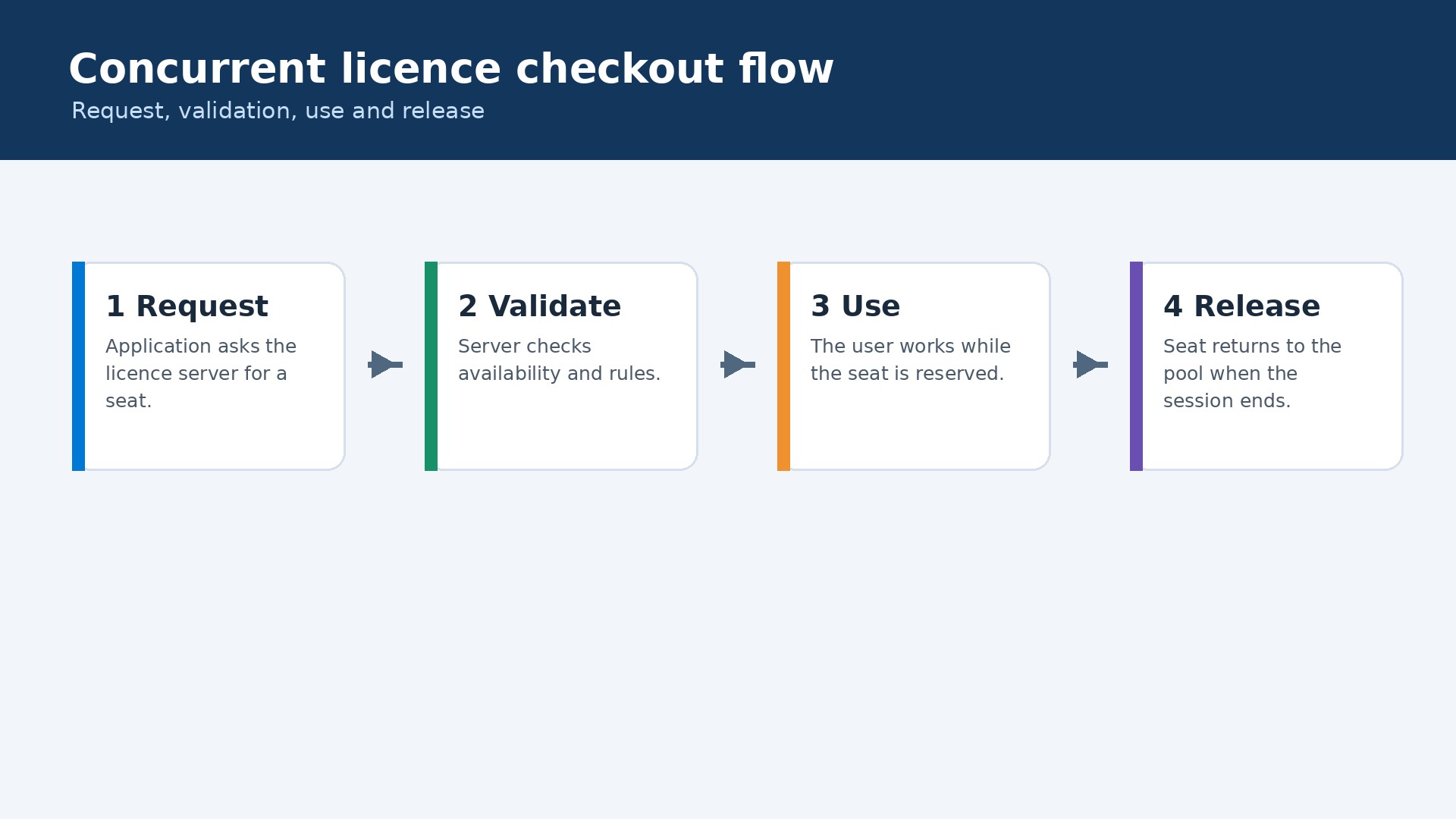
How a licence server works matters because floating licences do not assign the right to use software to one fixed person. They create a shared licence pool that is consumed when someone starts the application. A company can therefore buy fewer seats than potential users when not everyone works in the tool at the same time. This model is common in expensive, specialist or shift-based technical software.
The decisive difference from a named-user licence is simultaneity. If five people may need the application but only two use it at once, two concurrent seats can be enough, provided the contract allows that use. The licence server manages check-out and check-in, prevents overuse and creates evidence for a future software audit.
For European companies, the value is not only cost reduction. The model also reduces reactive purchases, measures real demand and forces clear ownership of administration. Before choosing it, review usage frequency, locations, remote access, the need for temporary borrowing and vendor support for the versions you plan to run.
When concurrent licences make sense
When concurrent licences make sense matters because floating licences do not assign the right to use software to one fixed person. They create a shared licence pool that is consumed when someone starts the application. A company can therefore buy fewer seats than potential users when not everyone works in the tool at the same time. This model is common in expensive, specialist or shift-based technical software.
The decisive difference from a named-user licence is simultaneity. If five people may need the application but only two use it at once, two concurrent seats can be enough, provided the contract allows that use. The licence server manages check-out and check-in, prevents overuse and creates evidence for a future software audit.
For European companies, the value is not only cost reduction. The model also reduces reactive purchases, measures real demand and forces clear ownership of administration. Before choosing it, review usage frequency, locations, remote access, the need for temporary borrowing and vendor support for the versions you plan to run.
Which software usually offers this model

Which software usually offers this model matters because floating licences do not assign the right to use software to one fixed person. They create a shared licence pool that is consumed when someone starts the application. A company can therefore buy fewer seats than potential users when not everyone works in the tool at the same time. This model is common in expensive, specialist or shift-based technical software.
The decisive difference from a named-user licence is simultaneity. If five people may need the application but only two use it at once, two concurrent seats can be enough, provided the contract allows that use. The licence server manages check-out and check-in, prevents overuse and creates evidence for a future software audit.
For European companies, the value is not only cost reduction. The model also reduces reactive purchases, measures real demand and forces clear ownership of administration. Before choosing it, review usage frequency, locations, remote access, the need for temporary borrowing and vendor support for the versions you plan to run.
At Licendi you can review professional options that often belong to these specialist environments, such as SigmaPlot 14, NVivo 12, Atlas.ti 9, Alphacam Designer 2020 y PSCAD 4.5. La disponibilidad exacta de un modelo flotante, concurrente, nominativo o perpetuo depende siempre de la ficha concreta, del fabricante y del contrato vigente, por lo que la compra debe cerrarse con el tipo de licencia validado.
CAD, engineering and technical analysis
CAD, engineering and technical analysis matters because floating licences do not assign the right to use software to one fixed person. They create a shared licence pool that is consumed when someone starts the application. A company can therefore buy fewer seats than potential users when not everyone works in the tool at the same time. This model is common in expensive, specialist or shift-based technical software.
The decisive difference from a named-user licence is simultaneity. If five people may need the application but only two use it at once, two concurrent seats can be enough, provided the contract allows that use. The licence server manages check-out and check-in, prevents overuse and creates evidence for a future software audit.
For European companies, the value is not only cost reduction. The model also reduces reactive purchases, measures real demand and forces clear ownership of administration. Before choosing it, review usage frequency, locations, remote access, the need for temporary borrowing and vendor support for the versions you plan to run.
At Licendi you can review professional options that often belong to these specialist environments, such as SigmaPlot 14, NVivo 12, Atlas.ti 9, Alphacam Designer 2020 y PSCAD 4.5. La disponibilidad exacta de un modelo flotante, concurrente, nominativo o perpetuo depende siempre de la ficha concreta, del fabricante y del contrato vigente, por lo que la compra debe cerrarse con el tipo de licencia validado.
Research, statistics and data
Research, statistics and data matters because floating licences do not assign the right to use software to one fixed person. They create a shared licence pool that is consumed when someone starts the application. A company can therefore buy fewer seats than potential users when not everyone works in the tool at the same time. This model is common in expensive, specialist or shift-based technical software.
The decisive difference from a named-user licence is simultaneity. If five people may need the application but only two use it at once, two concurrent seats can be enough, provided the contract allows that use. The licence server manages check-out and check-in, prevents overuse and creates evidence for a future software audit.
For European companies, the value is not only cost reduction. The model also reduces reactive purchases, measures real demand and forces clear ownership of administration. Before choosing it, review usage frequency, locations, remote access, the need for temporary borrowing and vendor support for the versions you plan to run.
At Licendi you can review professional options that often belong to these specialist environments, such as SigmaPlot 14, NVivo 12, Atlas.ti 9, Alphacam Designer 2020 y PSCAD 4.5. La disponibilidad exacta de un modelo flotante, concurrente, nominativo o perpetuo depende siempre de la ficha concreta, del fabricante y del contrato vigente, por lo que la compra debe cerrarse con el tipo de licencia validado.
Benefits for procurement and finance
Benefits for procurement and finance matters because floating licences do not assign the right to use software to one fixed person. They create a shared licence pool that is consumed when someone starts the application. A company can therefore buy fewer seats than potential users when not everyone works in the tool at the same time. This model is common in expensive, specialist or shift-based technical software.
The decisive difference from a named-user licence is simultaneity. If five people may need the application but only two use it at once, two concurrent seats can be enough, provided the contract allows that use. The licence server manages check-out and check-in, prevents overuse and creates evidence for a future software audit.
For European companies, the value is not only cost reduction. The model also reduces reactive purchases, measures real demand and forces clear ownership of administration. Before choosing it, review usage frequency, locations, remote access, the need for temporary borrowing and vendor support for the versions you plan to run.
A useful internal rule is to separate licence ownership from technical installation. Procurement should know what was purchased, IT should know where the licence server runs, and team leaders should know which roles are allowed to request access. When these responsibilities are mixed, renewals become harder and unused seats stay hidden.
Legal and compliance risks

Legal and compliance risks matters because floating licences do not assign the right to use software to one fixed person. They create a shared licence pool that is consumed when someone starts the application. A company can therefore buy fewer seats than potential users when not everyone works in the tool at the same time. This model is common in expensive, specialist or shift-based technical software.
The decisive difference from a named-user licence is simultaneity. If five people may need the application but only two use it at once, two concurrent seats can be enough, provided the contract allows that use. The licence server manages check-out and check-in, prevents overuse and creates evidence for a future software audit.
For European companies, the value is not only cost reduction. The model also reduces reactive purchases, measures real demand and forces clear ownership of administration. Before choosing it, review usage frequency, locations, remote access, the need for temporary borrowing and vendor support for the versions you plan to run.
The calculation should not start with total headcount but with peak concurrency. Review logs, projects, shifts, external users, testing needs and acceptable waiting time. If the licence server records frequent denials, the company does not have a technical problem; demand is higher than purchased capacity.
How to calculate how many licences you need
How to calculate how many licences you need matters because floating licences do not assign the right to use software to one fixed person. They create a shared licence pool that is consumed when someone starts the application. A company can therefore buy fewer seats than potential users when not everyone works in the tool at the same time. This model is common in expensive, specialist or shift-based technical software.
The decisive difference from a named-user licence is simultaneity. If five people may need the application but only two use it at once, two concurrent seats can be enough, provided the contract allows that use. The licence server manages check-out and check-in, prevents overuse and creates evidence for a future software audit.
For European companies, the value is not only cost reduction. The model also reduces reactive purchases, measures real demand and forces clear ownership of administration. Before choosing it, review usage frequency, locations, remote access, the need for temporary borrowing and vendor support for the versions you plan to run.
The calculation should not start with total headcount but with peak concurrency. Review logs, projects, shifts, external users, testing needs and acceptable waiting time. If the licence server records frequent denials, the company does not have a technical problem; demand is higher than purchased capacity.
| Question | What to check |
| Usage peak | Real simultaneous users |
| Contract | Allowed model and territory |
| IT | Server, VPN, logs and borrowing |
| Finance | Cost per effective use |
Checklist before buying
Checklist before buying matters because floating licences do not assign the right to use software to one fixed person. They create a shared licence pool that is consumed when someone starts the application. A company can therefore buy fewer seats than potential users when not everyone works in the tool at the same time. This model is common in expensive, specialist or shift-based technical software.
The decisive difference from a named-user licence is simultaneity. If five people may need the application but only two use it at once, two concurrent seats can be enough, provided the contract allows that use. The licence server manages check-out and check-in, prevents overuse and creates evidence for a future software audit.
For European companies, the value is not only cost reduction. The model also reduces reactive purchases, measures real demand and forces clear ownership of administration. Before choosing it, review usage frequency, locations, remote access, the need for temporary borrowing and vendor support for the versions you plan to run.
The calculation should not start with total headcount but with peak concurrency. Review logs, projects, shifts, external users, testing needs and acceptable waiting time. If the licence server records frequent denials, the company does not have a technical problem; demand is higher than purchased capacity.
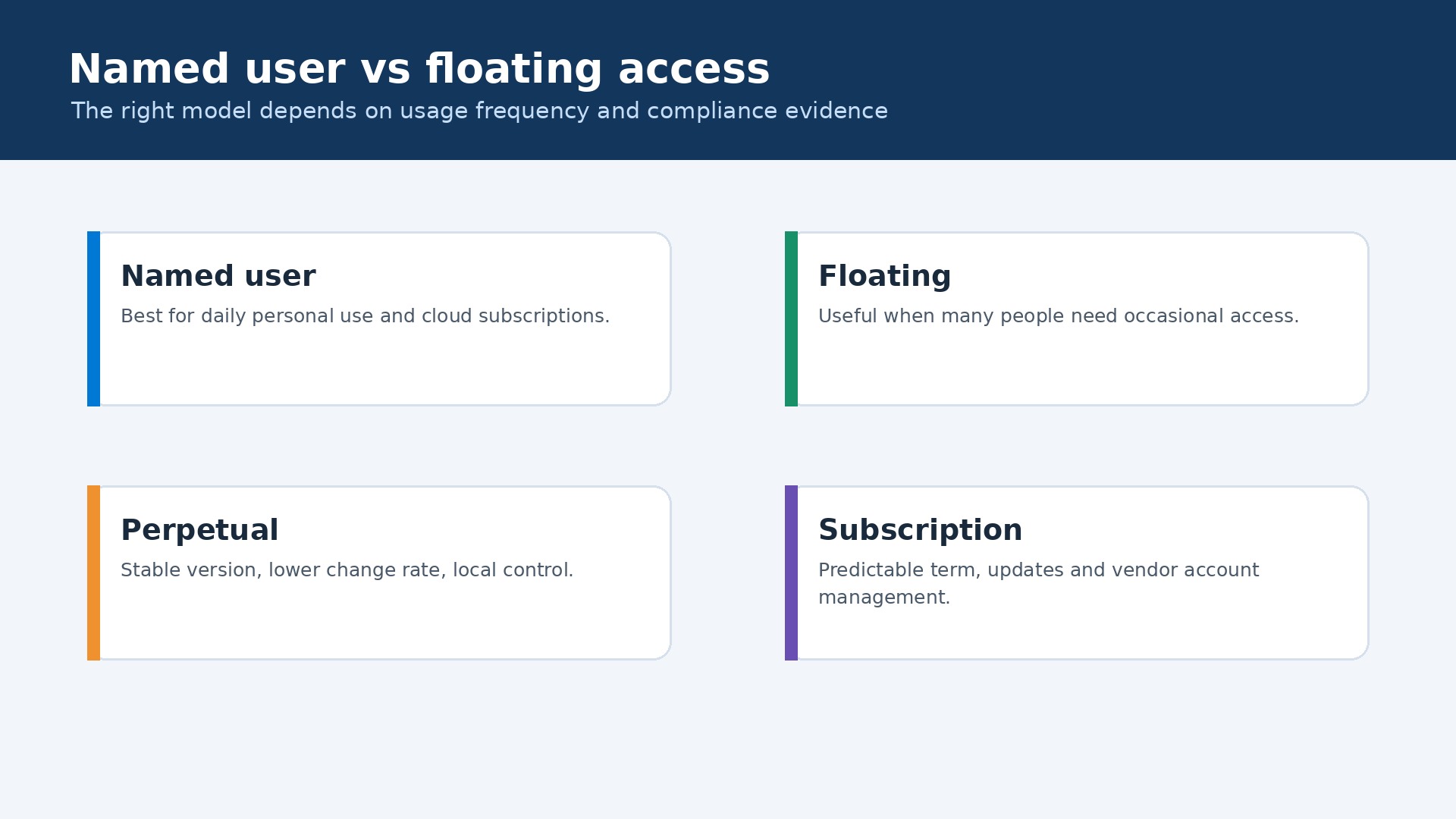
Alternatives: named user, perpetual and subscription
Alternatives: named user, perpetual and subscription matters because floating licences do not assign the right to use software to one fixed person. They create a shared licence pool that is consumed when someone starts the application. A company can therefore buy fewer seats than potential users when not everyone works in the tool at the same time. This model is common in expensive, specialist or shift-based technical software.
The decisive difference from a named-user licence is simultaneity. If five people may need the application but only two use it at once, two concurrent seats can be enough, provided the contract allows that use. The licence server manages check-out and check-in, prevents overuse and creates evidence for a future software audit.
For European companies, the value is not only cost reduction. The model also reduces reactive purchases, measures real demand and forces clear ownership of administration. Before choosing it, review usage frequency, locations, remote access, the need for temporary borrowing and vendor support for the versions you plan to run.
Where Licendi fits
Where Licendi fits matters because floating licences do not assign the right to use software to one fixed person. They create a shared licence pool that is consumed when someone starts the application. A company can therefore buy fewer seats than potential users when not everyone works in the tool at the same time. This model is common in expensive, specialist or shift-based technical software.
The decisive difference from a named-user licence is simultaneity. If five people may need the application but only two use it at once, two concurrent seats can be enough, provided the contract allows that use. The licence server manages check-out and check-in, prevents overuse and creates evidence for a future software audit.
For European companies, the value is not only cost reduction. The model also reduces reactive purchases, measures real demand and forces clear ownership of administration. Before choosing it, review usage frequency, locations, remote access, the need for temporary borrowing and vendor support for the versions you plan to run.
At Licendi you can review professional options that often belong to these specialist environments, such as SigmaPlot 14, NVivo 12, Atlas.ti 9, Alphacam Designer 2020 y PSCAD 4.5. La disponibilidad exacta de un modelo flotante, concurrente, nominativo o perpetuo depende siempre de la ficha concreta, del fabricante y del contrato vigente, por lo que la compra debe cerrarse con el tipo de licencia validado.
Official sources and useful documentation
MathWorks concurrent licence administration · JetBrains floating licences
Floating licence FAQ
Is a floating licence the same as a concurrent licence?
In many contracts the terms are used almost interchangeably, but the vendor definition matters. The key question is whether the limit is measured by simultaneous users.
Do all current CAD tools offer floating licences?
No. Many vendors have moved to named-user or subscription models. Check the version, contract and purchasing channel.
Does a concurrent licence prevent audits?
No. It helps control maximum use, but invoices, entitlements, logs and internal policy are still needed.
When is this model a poor fit?
When every user works in the tool daily, connectivity is unreliable or the vendor no longer permits network licences.