EN
 FR
 DE
 IT
 PT
 ES


Is Buying a Used Software Licence Legal? EU Law Explained
If you have ever considered purchasing a pre-owned software licence, you have likely asked yourself: is this actually legal? The short answer is yes. Since 2012, buying and selling used software licences has been fully legal across the European Union, thanks to a landmark ruling by the Court of Justice of the European Union (CJEU). This article explains exactly what the law says, what it covers, and how you can buy used licences with complete confidence.
The Quick Answer
Buying used software licences is legal in the EU. The Court of Justice of the European Union confirmed this in its ruling on 3 July 2012 in Case C-128/11, UsedSoft GmbH v Oracle International Corp. The court held that the principle of exhaustion of distribution rights applies to software, meaning that once a software publisher sells a licence, the original buyer has the right to resell it. This ruling applies throughout all EU and EEA member states.

The UsedSoft v Oracle Ruling Explained (Case C-128/11)
The case that changed the European software market began when UsedSoft GmbH, a German company specialising in the resale of used software licences, was taken to court by Oracle International Corp. Oracle argued that its licence agreements prohibited resale and that distributing used licences infringed its copyright.
On 3 July 2012, the CJEU ruled in favour of UsedSoft. The court found that Article 4(2) of Directive 2009/24/EC (the Software Directive) establishes the principle of exhaustion for software. In plain terms, once the copyright holder has sold a copy of software within the EU and received appropriate remuneration, their exclusive right to control the distribution of that particular copy is exhausted. The buyer may resell it.
Crucially, the court confirmed that this applies equally to software distributed physically (on disc) and software downloaded from the internet. Oracle had argued that downloads should be treated differently, but the CJEU rejected that distinction entirely.
The ruling had a major impact on the software industry. For the first time, the highest court in Europe had confirmed that digital goods could be resold just like physical ones. It opened the door for a legitimate, thriving second-hand software market — and gave businesses and consumers the legal certainty they needed to participate in it.
What Does "Exhaustion of Distribution Rights" Mean in Plain Language?
The principle of exhaustion is straightforward once you strip away the legal jargon. Think of it like buying a book. Once you purchase a book from a shop, the publisher cannot prevent you from selling that book to someone else. The publisher already received their payment when the book was first sold, and their right to control who owns that specific copy is "exhausted."
Software works the same way under EU law. When a company like Microsoft sells a licence for Microsoft Office 2024 Professional Plus or Windows 11 Pro, and the buyer later decides they no longer need it, that licence can be legally resold. The key conditions established by the CJEU are:
- The original licence was sold (not rented or temporarily licensed) within the EU.
- The original buyer renders their own copy unusable upon resale.
- The reseller can demonstrate the legitimacy and provenance of the licence.
This is precisely the model that Licendi operates under. Every licence we sell has been verified to meet these conditions.
It is worth noting that the exhaustion principle is not a loophole or a grey area. It is a fundamental part of EU intellectual property law, rooted in the balance between protecting creators' rights and ensuring the free movement of goods within the single market. The CJEU's ruling simply confirmed that this long-established principle applies to software in exactly the same way it applies to other copyrighted works.
What Types of Software Does This Cover?
The UsedSoft v Oracle ruling applies to perpetual software licences — that is, licences sold as a one-time purchase with no ongoing subscription requirement. This includes the vast majority of traditional software products. If you are weighing up the differences, our guide on perpetual vs subscription licences breaks it down in detail.
Covered under the ruling:
- Perpetual desktop software — products such as Microsoft Office (2016, 2019, 2021, 2024), which are purchased once and used indefinitely.
- Operating systems — Windows licences (Windows 10, Windows 11) purchased as one-time buys.
- Server software — products like Windows Server 2022 Standard and associated Client Access Licences (CALs).
- Volume licences — organisations that purchased software in bulk under volume licensing agreements can resell individual licences from those agreements, provided the conditions of exhaustion are met.
- Security software — perpetual licence editions of antivirus and security products.
What the Ruling Does NOT Cover
Transparency builds trust, and at Licendi we believe it is just as important to explain what the ruling does not cover as what it does. Not every software product can be resold, and understanding these boundaries protects both buyers and sellers. The exhaustion principle does not apply to:
- Subscription services (SaaS) — products like Microsoft 365 are subscription-based. You do not purchase a copy of the software; you pay for ongoing access to a service. There is no "copy" to resell. For a comparison of the two models, see Office 2024 vs Microsoft 365.
- Cloud-only applications — software that runs entirely in a browser with no local installation falls outside the scope of the Software Directive.
- Licences with active subscription components — if a licence bundle includes mandatory ongoing subscription elements, those elements cannot be resold separately.
- OEM licences tied to specific hardware — some OEM agreements restrict the licence to a particular device. The legal position on these is more nuanced, and Licendi only sells licences with clear resale rights.
How Licendi Ensures Every Licence Is Legitimate
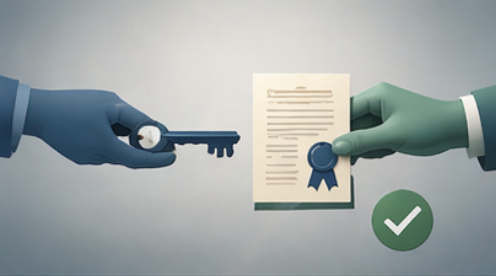
Understanding the law is one thing; trusting a seller to follow it is another. At Licendi, we have built our entire business around compliance with EU software law. Here is how we ensure that every licence you purchase is fully legitimate:
- Provenance verification — we trace every licence back through the chain of ownership to the original purchase from the publisher. We document the complete chain of title.
- Deactivation confirmation — before any licence is resold, the previous owner must confirm and demonstrate that their installation has been deactivated.
- Activation guarantee — every licence we sell comes with an activation guarantee. If your licence does not activate, we resolve it or provide a full refund.
- Invoice and documentation — you receive a proper invoice and licence documentation for your records, essential for businesses that need to demonstrate compliance during software audits.
- Ongoing customer support — our team is available to assist with activation and any questions, both before and after your purchase.
Whether you are purchasing a single Office 2024 Home & Business licence for personal use or equipping an entire office with Windows 11 Enterprise, every licence goes through the same rigorous verification process.
Why Businesses Are Choosing Used Software Licences
The financial case for used software licences is compelling. Businesses across Europe — from sole traders to mid-sized enterprises — are increasingly turning to the second-hand software market to reduce their IT costs without compromising on functionality or compliance. A used licence for Microsoft Office 2024 Professional Plus provides exactly the same features as a new one, but at a fraction of the price.
For organisations managing dozens or hundreds of workstations, the savings multiply rapidly. Instead of paying full retail for each seat, IT managers can source verified used licences and allocate the budget saved to other priorities — better hardware, training, or security tools like ESET PROTECT Entry or Kaspersky Small Office Security.
There is also an environmental dimension. Extending the useful life of software licences reduces waste in the digital economy. When a company upgrades from Office 2019 to Office 2024, their old licences do not need to go unused. Reselling them gives those licences a second life and keeps functioning software in productive use.
Five Common Myths About Used Software Licences
| Common Myth | Legal & Practical Reality |
|---|---|
| Used licences are pirated or counterfeit | Genuine resold keys with a documented transfer chain; legalised by CJEU C-128/11 (2012). |
| Publishers can block resale through their terms | Contractual no-resale clauses cannot override the EU exhaustion principle. |
| Used licences will not activate | Every licence Licendi sells is activation-verified; we guarantee replacement if it fails. |
| Only boxed software qualifies, not downloads | The CJEU explicitly extended exhaustion to downloaded software in its 2012 ruling. |
| Used licences miss out on updates | Perpetual licence holders receive the same security patches regardless of resale history. |
Myth 1: "Used software licences are pirated copies"
False. A used software licence is a genuine, previously purchased licence that has been legally resold. It is not a crack, a keygen, or an unauthorised copy. The licence key you receive from Licendi is the same legitimate key originally issued by the publisher.
Myth 2: "Software publishers can prevent resale through their terms and conditions"
False. This was one of Oracle's central arguments in Case C-128/11, and the CJEU rejected it. The court ruled that contractual clauses prohibiting resale cannot override the statutory exhaustion principle established in EU law. A publisher's terms of service cannot remove a right granted by legislation.
Myth 3: "Used licences will not activate or will be blocked"
False. When a licence is properly deactivated by the previous owner and the new owner activates it, the process works exactly as intended. This is why Licendi provides an activation guarantee on every purchase — we stand behind the legitimacy of our licences.
Myth 4: "This only applies to boxed software, not downloads"
False. The CJEU explicitly addressed this point in its 2012 ruling. The court stated that there is no functional difference between software distributed on a physical medium and software downloaded from the internet. The exhaustion principle applies equally to both.
Myth 5: "Buying used software means you will not receive updates"
Mostly false. For perpetual licence products, you receive the same updates and security patches as any other licence holder. The software publisher has no legal right to discriminate between an original buyer and a subsequent lawful owner. What you will not receive are version upgrades (e.g., upgrading from Office 2021 to Office 2024), but that is the same for any perpetual licence holder.
Frequently Asked Questions
Is buying used software legal outside the EU?
The UsedSoft v Oracle ruling (Case C-128/11) applies within the EU and EEA. Other jurisdictions have different legal frameworks. In the United States, the first-sale doctrine provides some similar protections, though the legal landscape is more complex for digital goods. Licendi operates under EU law and serves customers within the European market.
Can I use a used licence for commercial purposes?
Yes. There is no distinction in the law between personal and commercial use. A lawfully acquired used licence grants you the same usage rights as a new licence. Many of our customers are businesses looking to save on Microsoft licences while remaining fully compliant.
What if the original owner tries to use the licence again after selling it?
The CJEU ruling requires that the original owner must make their copy unusable at the point of resale. At Licendi, we verify deactivation as part of our sourcing process. If an issue were ever to arise, our activation guarantee protects you.
Do I need to tell Microsoft or another publisher that I bought a used licence?
No. You activate the licence in the normal way. There is no separate registration or notification process required for used licences. The activation process is identical to that of a new licence.
How much can I save by buying used software licences?
Savings vary by product, but customers typically save 40-70% compared to purchasing new licences directly from the publisher. For businesses purchasing multiple licences, the savings can be substantial. Browse our full range of Microsoft Office and Windows licences to see current prices.
Is there any risk of a software audit finding my used licence non-compliant?
No, provided the licence was acquired through a reputable dealer who can document the chain of title. Licendi provides full documentation with every purchase, giving you the evidence you need to demonstrate compliance in any audit scenario.
Start Saving on Legitimate Software Licences
EU law permits buying used software licences, and doing so is safe and smart. The CJEU's ruling in Case C-128/11 was not a technicality — it was a decisive affirmation of consumers' and businesses' rights within the European single market.
Since 2012, thousands of organisations and individuals across Europe have benefited from the cost savings that the second-hand software market provides — with complete peace of mind that their purchases are lawful and fully supported.
At Licendi, we make it easy. Every licence is verified, every purchase is backed by our activation guarantee, and our team is here to help if you need guidance. Whether you need a single licence or want to equip your entire organisation, explore our catalogue and see how much you can save.
This article is for informational purposes only and does not constitute legal advice. For guidance on your specific situation, consult a qualified legal professional.
Best regards,
The Licendi Team