EN
EN FR
FR  DE
DE  IT
IT  PT
PT  ES
ES 

Software Licenses for Remote Work
Remote work has become a common practice in recent years, initially driven by the 2020 pandemic and later consolidated as a standard working model in many companies. Being able to work from home or from any location offers flexibility and saves time, but it also presents challenges: to be just as productive as in the office, you need the right technological tools.
In this sense, having the right software licenses is essential for remote work. It’s not just about having the program installed, but ensuring it is an official and updated version, with all features enabled and guaranteed support. From office suites for creating documents to security solutions that protect your device, each type of software plays a key role in your remote workday.
In this blog, we will explore the essential software licenses for efficient and secure remote work, with a practical approach. We will discuss productivity tools such as Microsoft Office, cloud storage services, communication and collaboration programs, and security software (antivirus, backups, etc.). The goal is to help you understand which licenses you need and how they can help you optimize your remote work while avoiding the risks of using unlicensed or outdated software.
The Importance of Having Software Licenses for Remote Work
For a remote worker, using legally licensed software is not a luxury – it is a necessity. When you work from home without the direct support of your company’s IT department, you must ensure that your digital tools run smoothly and securely. This is where official licenses make a difference.
Using official and updated software ensures:
Security and Reliability
Licensed versions receive regular updates and security patches. In contrast, pirated or outdated programs may contain vulnerabilities or even hidden malware.
Full Functionality
Paid licenses unlock all features of the software. You won’t face unexpected limitations in the middle of your work (for example, watermarks, disabled functions, or expiration after a few days).
Technical Support
With legal software, you have vendor assistance or support access if something goes wrong. In remote work, solving issues quickly is essential to avoid losing productivity.
Compatibility and Updates
The files you create will be fully compatible with those of your colleagues and clients. Additionally, by staying updated, you avoid compatibility issues with other systems or documents.
Legal Compliance
Working with official licenses protects you from possible penalties or legal issues, especially if you are self-employed or running a business. It also projects a professional image by using legitimate tools.
In summary, having your programs properly licensed provides peace of mind and performance. You won’t have to worry about software suddenly stopping due to invalid activation, nor about exposing your data to risks. In remote work, where you depend 100% on your computer and applications, investing in licenses is well worth it to work with confidence.
Office Suite: The Foundation of Remote Productivity
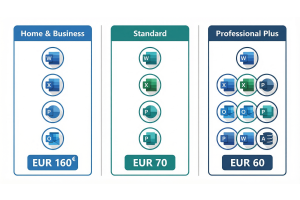
An office suite is essential for remote work. Word processors, spreadsheets, and presentation programs are everyday tools for any professional. Microsoft Office remains the leading solution in this field, with key applications such as Word, Excel, PowerPoint, Outlook (email and calendar), and OneNote.
Having an Office license ensures you can create and edit documents using the standard adopted by most companies. If you collaborate with colleagues from home, they will often share Office files; having the same suite prevents formatting problems or incompatibilities. In addition, modern versions of Office include highly useful features such as online co-authoring (multiple people editing a document simultaneously) through OneDrive.
Microsoft 365 (formerly Office 365) is the most attractive subscription option for remote work. For a monthly or annual fee, you always have access to the latest version of the apps, with the possibility of installing them on several devices simultaneously (PC, laptop, mobile). You also get generous cloud storage (1 TB per user in OneDrive), making it easy to save files and access them from anywhere. Those who prefer a one-time payment can opt for perpetual Office licenses, although these do not include cloud advantages or future version upgrades.
There are free office suites (LibreOffice) or online solutions (Google Docs), but in a professional environment it is advisable to use licensed tools compatible with business standards. This way, your productivity won’t be compromised by limitations or compatibility issues. In remote work, the office suite becomes your virtual “workspace”: having a high-quality license allows you to work with the same efficiency as in a physical office.
Cloud Storage: Your Files Always Accessible
When you work remotely, it’s essential to access your documents from any location and device. This is where cloud storage services come in. Instead of saving everything on your computer (risking not having it available outside your home or losing it if your device fails), the cloud keeps your files synchronized and secure.
Some popular services for remote work include:
OneDrive
Integrated with Microsoft 365 and Windows. It offers 5 GB for free, expandable to 1 TB per user with a Microsoft 365 plan. Ideal if you use Office, as it allows collaborative editing of documents.
Google Drive
Includes 15 GB for free. It is part of Google Workspace and integrates with Google Docs, Sheets, etc., enabling easy online collaboration.
Dropbox
Offers 2 GB for free. It stands out for its easy synchronization across multiple devices. Paid plans provide terabytes of space and additional security and sharing features.
Having an appropriate subscription to these services is important for remote workers. Free accounts may fall short in storage or features. If you handle many files or large ones, you’ll need more space. With a paid plan you get increased storage and professional features such as version history to recover old files and enhanced security.
Additionally, cloud storage facilitates teamwork: instead of sending documents back and forth by email, everyone accesses the same shared folder or file, always working on the most up-to-date version. This minimizes errors in documents.
In short, a good cloud service gives you the flexibility to access your files from anywhere and the peace of mind that you will always have a backup available. To work remotely with confidence, it’s worth investing in enough space from a reliable provider.
Video Conferencing and Communication Tools
Since you can’t speak face-to-face in the office, remote work relies heavily on video conferencing and communication tools for meetings, calls, and daily chats.
Some of the most widely used include:
- Zoom: The most popular video conferencing platform. The free version allows meetings of up to 40 minutes with multiple participants; paid licenses remove this limit and add features (more attendees, session recording, etc.). Google Meet is another widely used option, included with Google accounts and offering advanced features in Google Workspace.
- Microsoft Teams: Part of Microsoft 365, combining team chat, video calls, and document collaboration. It is the communication hub for many companies, integrating calendars, shared files, and more. If your organization uses Microsoft 365, you already have Teams with all its features (unlimited meetings, screen sharing, recording, etc.). A free version of Teams exists, but the business license provides the full, unrestricted experience.
- Slack: A channel-based messaging platform widely used in remote environments. It allows conversations organized by topic, file sharing, and basic voice calls. The free plan has limited message history, while paid plans offer unlimited history, group video calls, and more app integrations.
Having the right licenses for these platforms avoids unpleasant surprises during important meetings (for example, the call ending due to restrictions in the free version). Moreover, the advanced features of paid versions—such as session recording, more participants, or calendar integration—provide professionalism and efficiency in remote work.
In summary, investing in good video conferencing and chat tools keeps your team consistently connected, ensuring that distance is not an obstacle.
Collaboration and Project Management Software
Keeping work organized and coordinating tasks is another challenge of remote work. Fortunately, there are project management and remote team collaboration tools that help distribute tasks, set deadlines, and track progress transparently for everyone.
Some of the most popular include:
Trello
Organizes tasks in movable cards within Kanban-style boards (for example: “To Do,” “In Progress,” “Done”). It is visual and intuitive. The free version is sufficient for many individual uses or small teams, while paid plans (Business, Enterprise) add unlimited integrations, advanced automations, and greater control for large organizations.
Asana
A robust platform for managing projects through task lists or boards. It allows you to assign owners, set deadlines, attach files, and view progress in calendars or timelines. The free plan works well for small teams, but Premium plans unlock advanced features (such as timeline views, custom fields, task dependencies) and increase user limits.
There are many other similar tools (Monday.com, Basecamp, Jira, Notion, etc.), each with its own particular strengths, but generally all offer some limited free tier and scalable paid plans depending on your team size.
The key is to use the appropriate license. Free versions often have restrictions in the number of projects, users, or features. As your operations grow or you need advanced capabilities, subscribing to a paid plan becomes necessary. This investment translates into higher efficiency: with good project software, everyone knows what to do and by when, preventing confusion and duplicated efforts.
In a remote environment, having a centralized collaboration platform is like having a virtual office where everyone stays aligned. Licenses for these programs allow the team to stay organized and meet objectives even when working from different locations.
Antivirus and Cybersecurity for Remote Work
The home environment usually has fewer security measures than the office, so a good antivirus or security suite is essential for remote work to keep your devices and data safe from viruses, malware, ransomware, and other attacks.
Although Windows includes a basic antivirus (Defender), it is advisable to strengthen it with a reputable security solution. Free antivirus tools offer limited protection, while paid versions provide more complete defense, frequent updates, and better support. Additionally, many free antivirus solutions are restricted to personal use and display ads, making them unsuitable for a professional environment.
Advantages of a licensed antivirus:
- Constant and up-to-date protection: Real-time scanning with daily threat database updates to neutralize both new and known viruses.
- Advanced security features: Paid suites often include a personal firewall, anti-phishing/anti-spam filters for email, ransomware protection (preventing malicious encryption of your files), and even extra tools like VPN or parental controls.
- Multi-device coverage: Many licenses cover several devices at once (PC, laptop, smartphone, tablet), protecting your entire remote-work environment under a single subscription.
Some of the most well-known solutions include Kaspersky, Bitdefender, Norton, McAfee, ESET, and the Spanish provider Panda, among others. Any of these, kept up to date, offers a high level of protection.
Remember that cyber threats evolve constantly, so it is crucial to keep your antivirus updated to maintain effectiveness. A malware incident can leave you unable to work or expose sensitive data. Investing in an antivirus license ensures continuity: you will have a “digital guard” watching over your devices so you can focus on your tasks.
Password Managers: Protect Your Accounts
Managing dozens of passwords for different services is a common challenge in remote work. Using weak passwords or reusing the same one across multiple sites poses a huge risk. A password manager allows you to securely and conveniently manage all your credentials: it stores them in an encrypted “vault” protected by a single master password (ideally with two-factor authentication). You only need to remember the master key, while the manager generates and remembers the rest for you.
Advantages of using a licensed password manager:
- Maximum security: Passwords are stored encrypted with strong algorithms. You can (and should) use unique, strong passwords everywhere without worrying about forgetting them. If a service suffers a data breach, the manager will alert you to change it immediately.
- Convenience: With browser extensions and mobile apps, the manager automatically fills in your logins, saving time and eliminating the need to repeatedly type complex passwords.
- Multi-device synchronization: Premium plans securely synchronize your password vault in the cloud. You’ll have access to your credentials on both your work laptop and smartphone. (In many managers, multi-device sync is exactly the paid feature that encourages users to upgrade.)
Some of the most popular password managers include LastPass, 1Password, Dashlane, among others. Most of them offer a free plan with certain limitations and paid options with full functionality.
In summary, a password manager is a highly valuable investment for your security. It allows you to work remotely with peace of mind, knowing that all your accounts are protected with strong passwords without adding complexity to your workflow. Forgetting passwords or resorting to “123456” will be a thing of the past, and you’ll reduce the risk of intrusions caused by compromised credentials.

Backups: Protect Your Critical Information
Imagine your computer suffers a failure or ransomware encrypts all your files: without a recent backup, you could lose essential documents. That’s why performing periodic backups is a mandatory task for anyone working remotely.
In general, there are two types: local backups (on an external drive or NAS) and cloud backups. Ideally, you should combine both. A local backup allows you to quickly restore your data if the main drive fails; you can do this with built-in system tools (Windows File History, macOS Time Machine) or more advanced programs.
Cloud backups, on the other hand, store your encrypted files on remote servers. So even if a physical disaster occurs at your home or office (theft, fire, hardware failure), your data will be safe online. Specialized services such as Backblaze or Carbonite offer unlimited space through subscription plans.
To manage these backups efficiently, it’s best to use dedicated software:
- Acronis Cyber Protect (True Image) is a standout solution because it lets you combine local and cloud backup in a single tool. With an Acronis license, you can schedule automatic incremental backups of your entire system or specific folders, with encryption options and integrated anti-ransomware protection (preventing malware from encrypting your backups as well).
Establish a routine of frequent automatic backups and periodically check that you can restore files correctly. Having licensed backup software gives you the peace of mind that—whatever happens to your main device—your work documents will be safe, and you can resume your tasks without major losses.
Remember: investing time and resources in backups is investing in business continuity.
Tips for Choosing and Buying Software Licenses
Before wrapping up, let’s review some general tips to make sure you get the license that best fits your needs:
Define Your Needs
Evaluate which software you truly need for remote work and which edition or plan fits best. For example, do you need Office for one user or the whole family? Antivirus for one device or several? Don’t overpay for features you won’t use, but don’t fall short if you might need more capacity soon.
Compatibility and Requirements
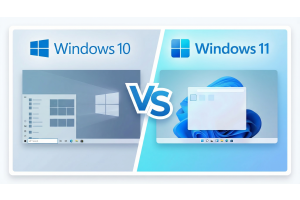
Make sure the license you purchase is compatible with your devices (Windows, macOS, mobile systems, etc.). Check technical requirements too (disk space, memory) so the software runs properly on your machine.
Subscription vs. One-Time Purchase
Decide whether a subscription model (always updated software, smaller recurring payments) or a perpetual license (one-time payment, fixed version) suits you better. For instance, Microsoft 365 via subscription gives you constant updates, whereas Office 2021 is perpetual but won’t receive future upgrades.
Buy from Trusted Sources
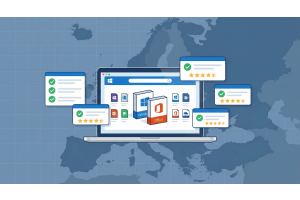
Always purchase original licenses from trusted sites or official distributors. Avoid “too good to be true” deals in unofficial marketplaces, as you could end up with invalid keys. A reliable option is Licendi, where you’ll find legitimate licenses at good prices with activation guarantee.
Support and Assistance
Consider the support offered by the manufacturer or vendor. Technical assistance can be crucial if you encounter issues with activation or usage. Official licenses often include access to support and updates—an advantage you won’t have with unlicensed software.
By following these tips, you’ll be able to equip yourself with all the software licenses needed for remote work safely, optimizing your investment and avoiding setbacks.
Conclusion
Digital transformation has made remote work an everyday reality, but its success largely depends on having the right tools. Throughout this blog, we’ve seen how productivity software licenses —from Office to antivirus solutions— are indispensable allies for working from home efficiently and securely. Equipping yourself with legitimate software ensures access to all features, protects your data, and keeps you aligned with professional standards without unpleasant surprises.
In short, investing in the right software licenses is investing in your productivity as a remote worker. With these programs working in your favor, you’ll be able to carry out your tasks with the same (or even greater) effectiveness as in a traditional office, benefiting from flexibility without compromising work quality.
Now that you know the main software licenses for remote work, it’s time to put everything into practice! Build your digital workspace with these tools, keep your programs updated, and you’ll see how remote work can be just as productive as on-site work, without compromising security or professionalism.
Successful remote work requires not only discipline and a good internet connection, but also the support of legal, updated software that boosts your performance day after day.