EN
EN FR
FR  DE
DE  IT
IT  PT
PT  ES
ES 

Rumors about Microsoft products for 2026
Microsoft is a company that never stops evolving. Looking back, every so often it surprises us with a new version of Windows, an innovative Surface device, or revolutionary changes to its cloud services. For this reason, looking ahead to 2026, expectations are high. Rumors and leaks are already starting to circulate, painting a very interesting picture of what may be coming.
If you are passionate about technology, you are surely curious to know what Microsoft has in store for 2026. After years filled with innovation, the Redmond-based company does not plan to stand still. Numerous rumors are circulating about new products and major updates that could see the light of day next year. In this blog, we will review—using a friendly and conversational tone—the main Microsoft rumors for 2026: from the highly anticipated Windows 12 to possible Surface devices, as well as new developments in Office, Xbox, and the ever-present artificial intelligence. Are you ready to discover them? Get comfortable and join us as we explore what Microsoft may have in store in the near future!
Windows 12: Microsoft’s next operating system
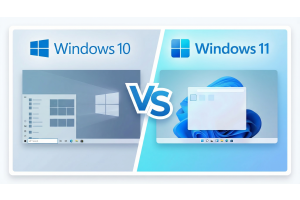
One of the most talked-about rumors is the arrival of Windows 12. Windows 11 is still relatively new, but Microsoft is reportedly already working on its successor. It is speculated that Windows 12 could be unveiled in late 2025 or early 2026, coinciding with the end of Windows 10 support in 2025. The big question is: what new features will this operating system bring?
Among the most frequently mentioned features are:
- Artificial intelligence integration throughout the entire system (leveraging experience with ChatGPT and the integrated Copilot assistant).
- A more modular and lightweight design (internally known as the CoreOS project), allowing faster updates and a more secure Windows.
- Redesigned interface, with changes such as a floating taskbar inspired by macOS and new, more streamlined icons and menus.
- Optimization for specific chips: Windows 12 would be designed to take advantage of processors with AI units (NPUs), similar to what Apple does with its M1/M2 chips.
- Possible higher hardware requirements: rumors suggest that to fully take advantage of its AI features, 16 GB of RAM and modern components may be recommended.
There is also talk that Microsoft will improve integration with mobile devices, making it easier to connect your smartphone to your PC and synchronize apps and notifications. In short, everything points to Windows 12 being a more powerful, intelligent, and secure system, clearly focused on the AI era and prepared for the years ahead. In addition, it is very likely that Microsoft will offer Windows 12 as a free upgrade for users who already have an active Windows 11 license, as it did with previous versions. Good news: if you keep your PC up to date, upgrading to the new Windows should not cost you anything!
Microsoft Office and productivity: the era of subscriptions and AI
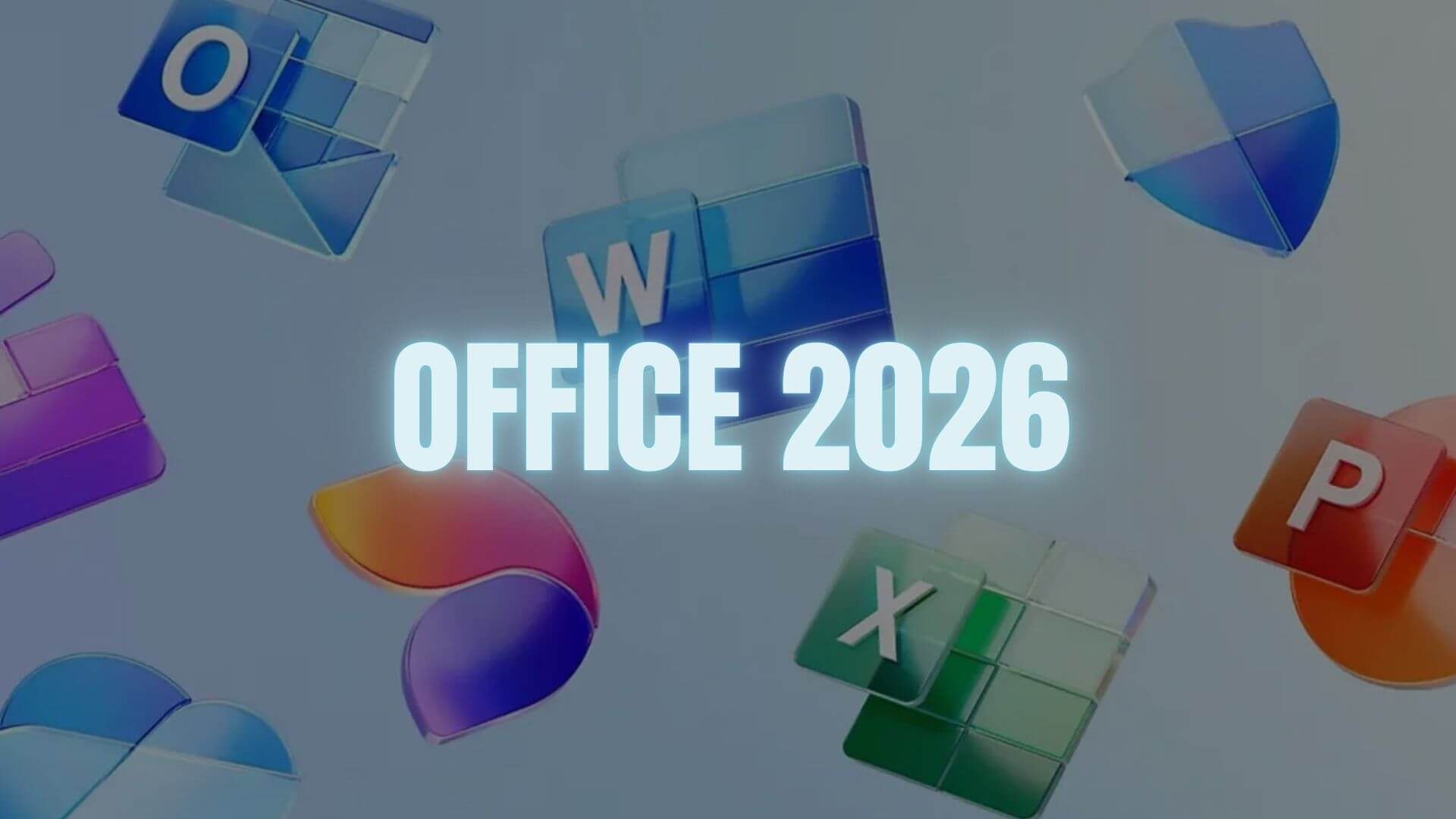
In the productivity space, Microsoft Office (now under the Microsoft 365 umbrella) will continue to evolve in 2026. Do not expect a traditional “Office 2026,” as Microsoft’s strategy is focused on Microsoft 365 subscriptions rather than launching new perpetual packages. What rumors are circulating about these office tools?
First and foremost is artificial intelligence. Microsoft has already begun implementing Copilot—an AI assistant—in Word, Excel, PowerPoint, and Outlook, and by 2026 this integration is expected to be far more comprehensive. Imagine opening Word and having an AI help you draft content or create PowerPoint presentations almost automatically. This vision of AI-assisted productivity could become the norm. In fact, generative AI features (text, images, data analysis) are expected to be deeply embedded within Office applications.
There is also talk of improvements in collaboration: tools like Microsoft Teams and the new Loop app will enable more dynamic, real-time collaboration on documents. Office will become increasingly cloud-integrated, making it easier for multiple users to edit, comment, and share simultaneously. In addition, Microsoft has been refreshing classic applications: for example, the new unified Outlook will replace the old one on Windows, and OneNote and other apps will receive visual updates to stay modern.
Ultimately, Microsoft’s productivity suite in 2026 will be smarter and more collaborative than ever. And although the names may change (goodbye “Office” brand, hello “Microsoft 365”), what truly matters to users is enjoying more powerful and easier-to-use tools, always kept up to date thanks to the subscription model.
Microsoft 365 and licensing: the subscription model in full force
A crucial aspect linked to Office and productivity products is the licensing model. For years, Microsoft has been pushing subscriptions to Microsoft 365 (formerly Office 365) over traditional perpetual licenses, and this trend will continue in 2026. In fact, in 2025 we saw price adjustments and new plans: for example, Microsoft launched Microsoft 365 Premium, a more expensive plan that includes expanded, unrestricted access to Copilot (AI). This gives us a clear idea of the direction Microsoft is heading.
By 2026, it is likely that more home users and businesses will opt for subscriptions instead of purchasing a one-time Office license. The advantages are clear: you always have the latest updates, new features (such as AI-powered tools), and cloud storage included. Microsoft may even offer special plans or discounts to attract users who are still using Office 2016, 2019, or 2021, as these older versions are reaching end of support (remember that Office 2021 support ends in October 2026). In short, the company wants to move users to the cloud and toward recurring payments.
Does this mean that perpetual licenses will disappear? Not necessarily overnight. Microsoft released Office 2021 as a one-time purchase and could launch another standalone version if there is sufficient demand (there were rumors of a possible “Office 2024”). However, it is clear that subscription-based services are the priority. For Microsoft, the future of software is clear: cloud services with recurring payments. The year 2026 could mark a turning point where the majority of users have already adopted this subscription model.
Windows Server and enterprise solutions: what to expect
Businesses are also closely watching Microsoft’s plans. Rumors suggest that a new version of Windows Server could be released around 2025 or 2026, aligning with improvements in Windows 12. This hypothetical Windows Server 2026 would place a stronger focus on security and hybrid cloud environments. It would likely include deeper integrations with Azure, making it easier to manage mixed environments (on-premises servers connected to cloud services). Features such as containers, virtualization, and support for modern hardware (including chips with AI acceleration in data centers) would be front and center.
There is also discussion about the future of other server products. For example, Exchange Server (the enterprise email server) is expected to have a new version on the roadmap, although Microsoft may move it toward a subscription-based model similar to Microsoft 365 rather than selling one-time licenses. Likewise, tools such as SharePoint Server or Skype for Business in on-premises deployments are gradually being replaced by their cloud-based equivalents. The overall trend for 2026 is clear: Microsoft wants to move businesses toward the cloud and software as a service, even for products that were traditionally installed on local servers.
Of course, not all companies can or want to migrate everything to the cloud immediately. That is why, if Windows Server 2026 is released, there will still be traditional licensing options (per-core licensing, CALs, etc.), but accompanied by incentives to move to Azure. In addition, it would not be surprising to see an evolution of SQL Server by that time, incorporating performance improvements and even artificial intelligence capabilities for database management. In any case, IT administrators will be closely following these releases to plan their infrastructure upgrades.
Surface and new devices: the evolution of Microsoft hardware
Microsoft is not just about software; new hardware developments are also expected in 2026, especially within the Surface family. The Surface lineup (which includes Surface Pro 2-in-1 tablets, Surface Laptop notebooks, the Surface Studio all-in-one, and more) could see significant refreshes. For example, there are rumors that Microsoft is collaborating with AMD on a custom ARM chip (codenamed “Sound Wave”) for future low-power Surface devices. This would mean that we could see a Surface powered by an AMD ARM processor in 2026, aimed at offering better battery efficiency and always-connected experiences.
At the same time, traditional models will continue to be updated. It is very likely that we will see a new-generation Surface Pro with more powerful processors (possibly the latest Qualcomm Snapdragon X-series for the ARM version, and 13th- or 14th-generation Intel Core processors for the Intel version). We may also see a Surface Laptop 6 or 7 with improved displays and performance. Even the elegant desktop Surface Studio could finally receive a major update, given that its last significant refresh was several years ago.
In terms of design, Microsoft usually maintains the premium Surface aesthetic, but surprises are always possible: new colors, screen sizes, or even a foldable Surface different from what we have seen so far. We should also not forget more affordable models like Surface Go or Surface Laptop Go, which could be updated with better components while keeping attractive prices for students and basic use cases. What is clear is that the company will continue striving to tightly integrate its hardware and software, offering devices optimized for Windows 11 and the future Windows 12. If you are thinking about buying a PC, 2026 promises very attractive options within the Microsoft ecosystem!
Mixed reality and mobile devices: the uncertain future of HoloLens and Surface Duo
Beyond PCs and tablets, many people wonder what Microsoft will do in areas such as mixed reality and smartphones. When it comes to mixed reality (a blend of augmented and virtual reality), Microsoft introduced its HoloLens device aimed at enterprise use. There was talk of a possible HoloLens 3, but reports suggest that the project has faced delays and even internal rethinking. It is unclear whether we will see a new HoloLens in 2026; Microsoft may be more focused on mixed reality applications rather than proprietary headset hardware. For example, the Microsoft Mesh platform aims to enable virtual meetings and collaborative 3D experiences using headsets from different manufacturers, without relying on a dedicated HoloLens device.
And what about mobile devices? After the farewell to Windows Phone, Microsoft tried its luck with the Surface Duo, a dual-screen Android device. The Surface Duo 2 was released in 2021, but its success was limited. There were rumors of a Surface Duo 3 with a foldable display (book-style, similar to a Galaxy Fold) instead of two separate screens. However, those plans were apparently canceled or postponed. As of today, it seems unlikely that Microsoft will launch its own smartphone in 2026, although surprises are always possible. For now, its mobile strategy focuses on offering its applications and services (Office, Outlook, Teams, Xbox, etc.) on Android and iOS platforms rather than on building its own hardware.
Competition in virtual and mixed reality remains strong (Apple with Vision Pro, Meta with Quest, etc.), but Microsoft prefers to collaborate with others and focus on professional use cases rather than releasing its own consumer headsets. In short, Microsoft’s outlook in AR and mobile is uncertain: the company is present in these areas through software and services, but dedicated hardware (such as headsets or phones) remains a question mark looking ahead to 2026.
Xbox and video games: a new console on the horizon?
Gamers are also keeping a close eye on Microsoft. With the Xbox Series X|S launched in 2020, many are wondering whether there will be new Xbox hardware in 2026. Although a full next-generation Xbox console will likely arrive closer to 2028, rumors suggest that Microsoft could release interim updates. There has been talk of enhanced versions or revisions of the Xbox Series X and S (for example, a more compact “slim” model or editions with increased storage). There were even leaks about a possible new Xbox Elite Series 3 controller with advanced features (such as a gyroscope and improved haptic feedback) for 2025–2026.
Another front is cloud gaming. Microsoft already has an advantage with Xbox Cloud Gaming (xCloud) integrated into Game Pass Ultimate. By 2026, we could see developments such as a dedicated streaming console (a dongle-type device for cloud gaming on any TV) or the Xbox app being built directly into smart TVs. The idea of playing Xbox titles from the cloud on any screen is becoming increasingly realistic, and Microsoft will likely continue pushing this strategy.
In addition, the company now has studios like Bethesda and Activision Blizzard under its wing (following recent acquisitions). This means that by 2026 there will be an even stronger catalog available on Xbox Game Pass. We could see major exclusives or day-one releases on the service, making the Xbox platform very attractive. While a new Xbox “Series” console may not arrive in 2026, the Xbox ecosystem will certainly be full of new games, services, and perhaps some surprise accessory hardware.
Microsoft Edge and Bing: search reinvented with AI
We cannot forget the front of browsers and search engines. Microsoft has been competing with Edge (its web browser) and Bing (its search engine) against Chrome and Google. In 2023, we saw a bold move: the integration of ChatGPT (via the GPT-4 model) into Bing, offering conversational and intelligent search results. By 2026, Microsoft is expected to continue refining this formula. Bing could leverage even more advanced AI models to provide more accurate and useful answers, further differentiating itself from traditional search.
Meanwhile, Edge has become more than just “the browser you use to download Chrome.” Microsoft has packed it with features (such as Collections, vertical tabs, and a Copilot panel to summarize pages or generate content). Rumors suggest that Edge will continue to deepen its integration with Windows 11/12, potentially becoming a central hub for web and productivity experiences. Imagine a browser that not only lets you browse, but also helps you with everyday tasks through AI: summarizing long articles, suggesting purchases, organizing your agenda… that is the direction Microsoft is heading.
Although Chrome still dominates market share, Microsoft believes that Edge’s enhanced privacy and Bing’s unique AI-powered capabilities will attract more users. Given its close relationship with OpenAI, it would not be surprising if Bing eventually incorporates models such as GPT-5 as soon as they become available, keeping competitors on their toes. If current trends continue, by 2026 we could see Bing gaining more ground, especially as people adopt integrated AI assistants. In short, competition in search is heating up again, and Microsoft wants to be a key player.
Collaboration and creativity tools: beyond traditional Office
Microsoft is also expanding its ecosystem of applications with new offerings focused on collaboration and creativity. One example is Microsoft Loop, a real-time collaboration platform that allows users to create components (text, lists, tables) that stay synchronized across applications (Teams, Outlook, etc.). By 2026, Loop could become a key teamwork tool, enabling seamless simultaneous editing and breaking down barriers between apps.
In the creative space, there is Microsoft Designer, recently introduced to help users easily design graphics and posts with the help of AI (such as DALL·E for image generation). By 2026, Designer is expected to be an integral part of Microsoft 365, allowing any user to create professional-quality visual content without being an expert. The same applies to Clipchamp, the video editor acquired by Microsoft: by then, it will likely be more refined, offering simple browser-based video editing with intelligent features for assembling clips.
We should also not forget tools for developers and analytics: GitHub Copilot (the AI-powered coding assistant) will continue to evolve and could be more deeply integrated into Visual Studio by 2026, making programming even more productive. And the Power Platform suite (Power BI, Power Apps, Power Automate) will likely incorporate more intelligent automation and predictive capabilities for businesses.
In summary, Microsoft is attacking all fronts: office productivity, design, development, data… with new applications or major improvements. Rumors suggest that the company aims to offer an increasingly complete set of tools, with AI as the key ingredient that sets them apart.
Artificial intelligence everywhere: Microsoft’s big bet
If there is one topic that encompasses almost all the rumors, it is artificial intelligence. Microsoft has made it clear that it sees AI as the future, and by 2026 this commitment will be total. We have already mentioned Copilot in Windows 11/12 and in Office, as well as AI in Bing, but the vision goes further: Microsoft wants AI to be present across all its platforms, working behind the scenes to improve the user experience.
For example, Windows 12 and its successors are expected to feature a unified AI-powered assistant that helps with any task: from adjusting settings to answering emails or planning your schedule, all using natural language. This assistant could learn from your habits and context to provide proactive assistance. Likewise, AI could be used to improve system performance and energy consumption by optimizing processes in real time.
In cloud services, Microsoft is developing its own AI chips for its data centers (often referred to as the “Athena” project), aiming to accelerate model training and reduce reliance on third parties such as Nvidia. By 2026, Azure could offer instances powered by Microsoft-designed AI hardware, optimized to run services such as the OpenAI models used by Bing and Copilot. This would mean lower costs and greater efficiency, enabling AI to be integrated into even more products.
In conclusion, AI will be the common thread running through nearly everything new from Microsoft. It will no longer be an add-on, but an integral part of Windows, Office, Azure, security, technical support, and more. The company wants its products to “think” and anticipate user needs, making our interaction with technology more natural and powerful.
Azure and the cloud: the constant expansion of online services
We cannot overlook Azure, Microsoft’s cloud platform, which in 2026 will continue to be a fundamental pillar of its business. Although Azure is not a “product” that users buy in a store, its improvements impact everything else (from Xbox to Office, everything relies on the cloud). Microsoft will likely open more data centers and Azure regions around the world, improving the speed and reliability of its services. We will also see continuous advances in cloud security, as data protection is critical for businesses.
In terms of new services, Azure will likely expand its range of specialized services. For example, Microsoft could launch more customized artificial intelligence services (vision, speech, and language APIs) so that companies can easily integrate AI into their applications. Likewise, Microsoft will continue to push edge computing and hybrid solutions: with Azure Arc, it is possible to manage on-premises resources alongside the cloud, and this will be even more important for companies with mixed environments in 2026.
An interesting rumor is the possible arrival of Windows 365 for consumers. Currently, Windows 365 (the Cloud PC) is aimed at businesses, but Microsoft could eventually offer individual users the option of having a Windows desktop in the cloud via subscription. Imagine being able to access your virtual PC from any device, without worrying about local hardware. If this idea comes to fruition, 2026 could be the year when we start seeing Windows as a streaming service for the general public.
In short, the Azure cloud will continue to grow in both capabilities and prominence. Microsoft wants both businesses and users to place increasing trust in scalable online services, and everything suggests that the company will keep innovating to stay at the forefront of cloud computing.
Security and privacy: protecting users in 2026
With so many technological advances, Microsoft is not neglecting security and privacy, which will remain crucial in 2026. In Windows 12, for example, security is expected to be strengthened from the core: the aforementioned modular architecture would help isolate parts of the system to reduce risks, and requirements such as TPM 2.0 and Secure Boot will continue to be standard to protect against malware. There is even talk of integrating the Microsoft Pluton security chip into more new PCs, adding extra layers of hardware-based protection.
As for Microsoft Defender, the antivirus and threat protection solution, it will likely leverage AI to proactively detect suspicious behavior. By 2026, we could see Defender identifying zero-day attacks in real time thanks to machine learning trained on millions of threat samples.
User privacy will also be in the spotlight. Microsoft has learned from past mistakes and from regulations (such as those in Europe). It is possible that Windows and Edge will offer users more control over their data, greater transparency about what is shared, and features such as more private browsing or improved tracking blockers—all aimed at earning user trust.
In summary, in 2026 Microsoft will seek to ensure that users can enjoy new features with the peace of mind that comes from being protected. Every advancement will be accompanied by security measures and respect for privacy, because in the digital age, both aspects are fundamental to the success of any product.
Final tips: how to prepare and make the most of what’s coming
With so many potential launches on the horizon, what can you do to get ready? First of all, keep your software up to date: if you are still using Windows 10, consider upgrading to Windows 11 soon so you are ready for Windows 12 when it arrives. It is also a good idea to start familiarizing yourself with Microsoft 365 and Copilot features, as AI will play a leading role.
When it comes to hardware, you may not need to buy anything new right away, but if your PC is very old, keep in mind that Windows 12 may require more modern specifications (as mentioned, more RAM or AI-capable chips). The good news is that Microsoft usually offers free upgrade options if you already have legitimate previous versions.
Microsoft licenses: here comes a valuable tip. If you need to acquire software, do not forget that you can purchase reused licenses for Windows, Office, Windows Server, and other Microsoft products in our Licendi store. This allows you to obtain official keys at a more affordable price and in a fully legal way, giving a second life to licenses that other companies no longer use. It is an excellent way to save money ahead of the upcoming upgrades.
Finally, stay informed. Rumors are exciting, but it is always wise to wait for official confirmations before making major decisions (such as changing hardware or operating systems). We will continue to share the latest Microsoft news so you do not miss anything. And do not forget to enjoy the journey: technology moves fast, but it is here to make our lives easier and more enjoyable. Every new version of Windows or gadget comes with a learning curve, yes, but also with opportunities to do amazing things. The key is to stay curious and open to trying what’s new.
And you— which of these possible Microsoft launches are you most looking forward to? It is okay to dream while we wait for official confirmations! Thank you for reading and for joining us on this journey through rumors. Until next time!