EN
EN FR
FR  DE
DE  IT
IT  PT
PT  ES
ES 

Second-Hand Software Licenses: They're Legal
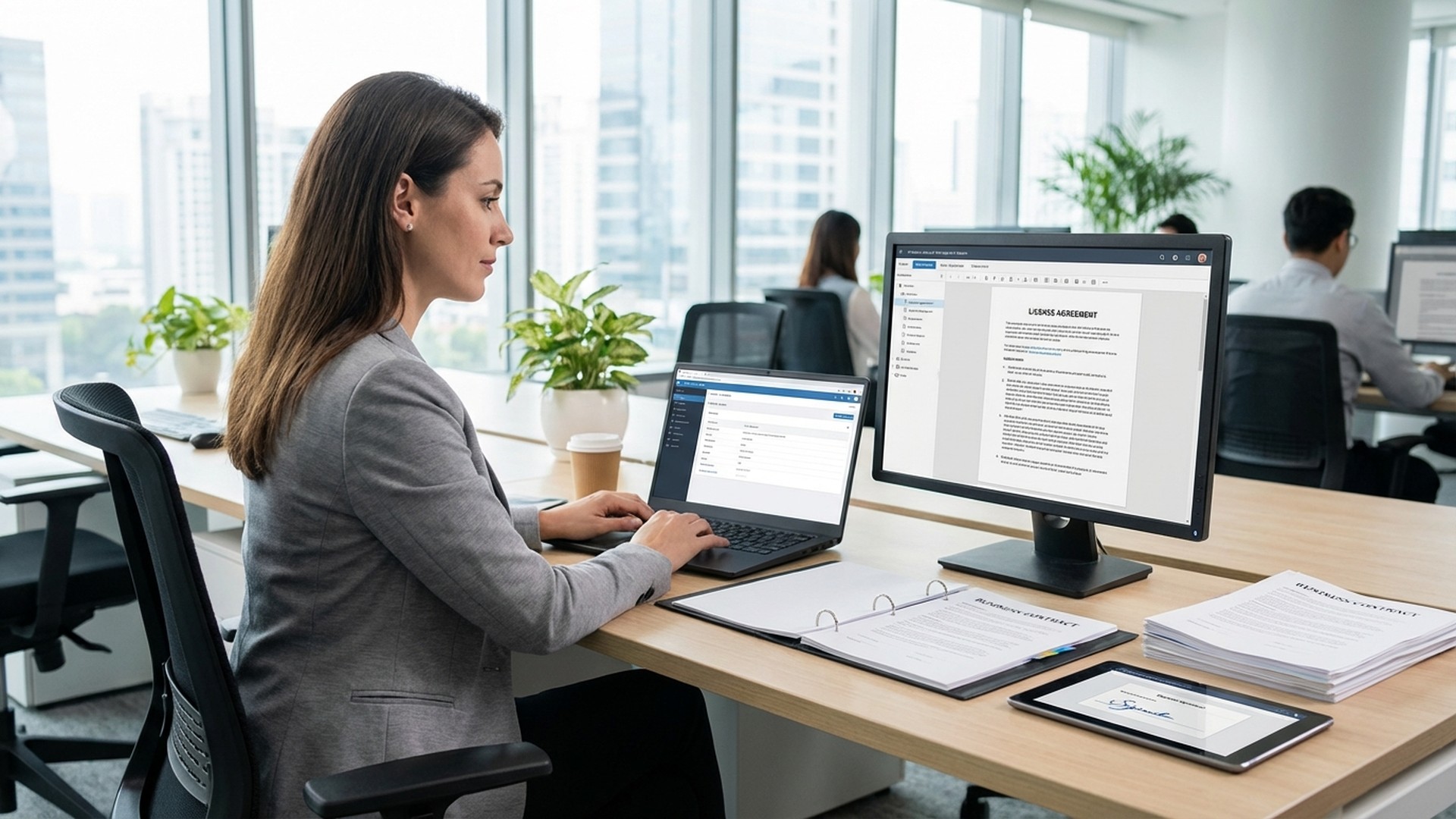
If you have ever wondered whether it is legal to buy second-hand software licenses, the answer is a resounding yes. The secondary market for software licenses is not only perfectly legal in the European Union but is backed by rulings from the Court of Justice of the European Union and constitutes a smart economic alternative for businesses and individuals alike. In this comprehensive article, we will explore all aspects of this market: its legal framework, how it works, why it is beneficial, and how you can take advantage of it safely.
What is the Secondary Software License Market
The secondary market for software licenses refers to the buying and selling of software licenses that have already been used or previously acquired by another person or company. It is similar to buying a used car or a second-hand book: the original product remains exactly the same, but it changes ownership at a price generally lower than the market rate.
When a company acquires software licenses, for example, 100 Microsoft Office or Windows licenses, and subsequently reduces its workforce or migrates to other solutions, those unused licenses can be legally sold to third parties. This is the foundation of the secondary market: giving a second life to licenses that would otherwise remain unused.
This market has grown exponentially in recent years due to several factors. Firstly, digital transformation has led many companies to restructure their software needs. Mergers, acquisitions, workforce reductions, and cloud migrations constantly generate surplus licenses. Secondly, the economic climate has made both companies and individuals seek more economical alternatives without sacrificing the quality of the software they use.

The Legal Framework: The UsedSoft vs Oracle Ruling of 2012
The turning point for the secondary software license market was the historic ruling by the Court of Justice of the European Union (CJEU) in the case of UsedSoft GmbH v. Oracle International Corp., issued on July 3, 2012 (Case C-128/11). This ruling unequivocally established that the resale of software licenses is legal in the European Union.
UsedSoft was a German company specializing in the sale of second-hand software licenses. Oracle, the technology giant, sued UsedSoft arguing that the resale of its licenses violated their copyright. The case reached the CJEU, which issued a revolutionary ruling.
The court ruled that the principle of exhaustion of the distribution right applies not only to software sold on physical media (such as CDs or DVDs) but also to software downloaded from the internet. This means that once the copyright holder has sold a copy of the software within the European Economic Area, they lose control over subsequent sales of that specific copy.
You can consult the complete ruling on the official page of the Court of Justice of the European Union, where all the legal foundations of this historic decision are detailed.
The Key Points of the Ruling
The UsedSoft vs Oracle ruling established several fundamental principles that transformed the software market in Europe:
First, the court determined that there is no legal difference between a physical copy of software and a downloaded copy. In the words of the CJEU, "from an economic point of view, the sale of a computer program on CD-ROM or DVD and the sale by downloading from the internet are similar."
Second, it established that the original buyer of a software license acquires a property right over that copy. This property right allows them to sell, give away, or transfer the license to a third party.
Third, the court clarified that the exhaustion of the distribution right occurs regardless of whether the software was acquired with a perpetual use license or through a one-time payment. What matters is that a "sale" has occurred in the economic sense of the term.
Fourth, conditions were imposed for legitimate resale: the original seller must render their copy of the software unusable after the sale, and the second-hand buyer acquires the same rights that the original buyer had.
The Principle of Exhaustion of Distribution Rights
To fully understand the legality of the secondary license market, it is essential to understand the principle of exhaustion of distribution rights. This principle, enshrined in Article 4(2) of Directive 2009/24/EC on the legal protection of computer programs, is the legal cornerstone that allows the resale of software.
The principle of exhaustion establishes that once the copyright holder sells a copy of their software within the European Economic Area (either directly or through authorized distributors), their exclusive right to control the distribution of that specific copy is "exhausted." In other words, they cannot oppose subsequent sales of that copy.
This principle has clear economic and social logic: it prevents copyright holders from indefinitely controlling the market for their products and allows the free movement of goods within the European Union. Without exhaustion, software manufacturers could block any resale, creating a perpetual monopoly over each copy sold.
It is important to note that exhaustion applies copy by copy. If a company bought 100 licenses and wants to sell 50, only those 50 specific licenses are subject to exhaustion. The other 50 remain with the original buyer, and licenses cannot be "duplicated" simply because the principle of exhaustion exists.
Conditions for Exhaustion
The CJEU established several conditions that must be met for exhaustion to be valid:
The first sale must be legitimate: The license must have been originally acquired legally, either directly from the manufacturer or from an authorized distributor.
The seller must render their copy unusable: After the sale, the original seller cannot continue to use the software. They must uninstall it from all their systems and destroy any backup copies.
Volume licenses cannot be split: If a company acquired a volume license covering 100 users, they cannot sell 50 of those rights and keep the other 50. The license is indivisible in these cases.
The buyer acquires the original rights: The new owner has the right to download the software from the manufacturer's website and receive updates and patches like any other legitimate user.
How the Secondary Market Works in Practice
Understanding the legal theory is important, but equally crucial is understanding how this market works in daily practice. The process of buying and selling second-hand licenses involves several steps and guarantees that protect both buyers and sellers.
Where Do the Licenses Come From
The licenses sold in the secondary market come from various sources, all of them legitimate:
Corporate restructuring: When companies merge, acquire another company, or reduce staff, they often have surplus licenses. A company with 500 employees that reduces its workforce to 300 has 200 licenses it no longer needs.
Technology migrations: Companies that migrate from on-premise software to cloud solutions (such as from traditional Office to Microsoft 365) can sell their existing perpetual licenses.
Version changes: When upgrading to a more recent version, licenses for the previous version can be sold. For example, when migrating from SQL Server 2022 to SQL Server 2025, licenses for the previous version become available for resale.
Bankruptcies and liquidations: When a company closes, its assets, including software licenses, are liquidated. These licenses enter the secondary market at very competitive prices.
Inventory surplus: Authorized distributors sometimes acquire more licenses than they can sell. These surpluses end up in the secondary market.
The Purchase Process
When you buy a second-hand license through a reputable distributor like Licendi, the process is clear and secure:
Step 1: Product selection. You choose the license you need, whether it's Windows, Office, an SQL server, or any other enterprise software.
Step 2: License verification. The distributor verifies that the license is authentic, that it was legally acquired, and that the original seller has rendered their copy unusable.
Step 3: Rights transfer. You receive the product key or license code, along with documentation proving your right to use the software.
Step 4: Installation and activation. You download the software directly from the manufacturer's website (Microsoft, for example) and activate it with your key. The software works exactly as if you had bought it new.
Step 5: Support and updates. You are entitled to all updates and security patches, just like any other legitimate user.
Benefits of the Secondary Market for Businesses
The secondary license market offers significant advantages for businesses, especially in the current economic context where cost optimization is a priority.
Substantial Economic Savings
The most obvious advantage is economic savings. Second-hand licenses typically cost between 30% and 70% less than new licenses. For a company that needs to equip 100 workstations with Microsoft Office, this can mean savings of tens of thousands of euros.
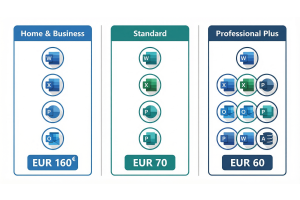
Consider this practical example: Microsoft Office 2021 Professional Plus has a list price of approximately 440 euros per license. In the secondary market, the same license can be found for 60-100 euros. For a company of 100 employees, this represents savings of between 34,000 and 38,000 euros just on Office licenses.
Perpetual Licenses vs Subscriptions
Another crucial benefit is access to perpetual licenses. While Microsoft and other manufacturers push users toward subscription models (Microsoft 365, for example), the secondary market allows you to acquire perpetual licenses that do not require monthly or annual payments.
A perpetual license means you pay once and can use the software indefinitely. There are no recurring fees, no unexpected price increases, and you don't depend on internet connectivity to access your work tools.
Flexibility and Control
Second-hand licenses offer greater flexibility in software asset management. You can buy exactly the licenses you need, without being tied to predefined packages or enterprise licensing programs that don't fit your reality.
Additionally, you maintain total control over your software. You don't depend on unilateral manufacturer decisions to discontinue products or change terms of service. If Microsoft decides to stop supporting a version, your license remains valid forever.
Regulatory Compliance
Buying second-hand licenses through reputable distributors guarantees regulatory compliance. You receive documentation that certifies the legality of your license, which is essential for software audits.
Software audits are becoming increasingly frequent, and fines for using unlicensed software can be devastating. With properly documented second-hand licenses, you are completely protected against any audit.
Benefits for Individuals and Freelancers
The benefits of the secondary market are not limited to large companies. Individuals, freelancers, and small businesses can also take advantage of these benefits.
Professional Software at Accessible Prices
For a freelancer or small business, the cost of professional software can be prohibitive. Monthly subscriptions add up quickly, and buying new licenses may be out of budget.
The secondary market democratizes access to professional software. A graphic designer can access Adobe tools, an accountant can use business management software, and a developer can obtain database tools like SQL Server, all at a fraction of the original price.
No Mandatory Subscriptions
Many individuals prefer to avoid subscriptions for various reasons: limited budgets, privacy concerns, or simply a preference for owning their software rather than "renting" it.
The secondary market offers that alternative. You can buy an Office 2019 or 2021 license, use it for years, and never pay another fee. It's your software, forever.
Updates on Your Terms
With a perpetual license, you decide when to update. You're not obligated to accept automatic updates that change the interface or remove features you like. You can keep using the version you know and master as long as it works for you.
What to Look for When Buying Second-Hand Licenses
If you're considering buying software licenses in the secondary market, there are several important factors you should consider to ensure a safe and satisfactory purchase.
Seller Reputation
The most important factor is the seller's reputation. Look for established distributors with a proven track record, customer reviews, and clear policies. Avoid suspiciously cheap offers on auction sites or anonymous sellers.
A reputable distributor like Licendi offers total transparency about the origin of their licenses, complete documentation, and performance guarantees. If something goes wrong, you have someone to claim from and a way to resolve the problem.
License Documentation
Make sure you receive documentation certifying the legality of the license. This should include proof of the original purchase, certification that the previous seller has rendered their copy unusable, and the terms of the transfer.
This documentation is your insurance against any dispute or audit. Without it, you have no way to prove that your license was legally acquired.
License Type
Not all licenses are the same. There are OEM licenses (linked to specific hardware), retail licenses (freely transferable), and volume licenses (for businesses). Make sure you understand what type of license you're buying and what its limitations are.
OEM licenses, for example, may be cheaper but are legally tied to the first computer where they are installed. Retail licenses are more expensive but can be transferred to a new device if you change computers.
Warranty and Support
A good distributor offers a performance guarantee. If the license doesn't activate or presents problems, you should be able to get a replacement or refund. Look for sellers who offer post-sale support and have clear communication channels.
Return Policy
Although software licenses are normally not returned once activated, a serious seller should offer some return policy for cases where the license doesn't work as promised.
Why Licendi is a Trusted Distributor
Licendi has established itself as one of the leading distributors of software licenses in the European secondary market. There are several reasons why thousands of companies and individuals trust us.
Verified Origin of All Licenses
Every license we sell has a verifiable origin. We work directly with European companies that have surplus licenses, and every transaction is documented. We don't buy licenses from dubious sources or anonymous third parties.
Complete Documentation
We provide all the necessary documentation to certify the legality of your purchase. This includes certificates of authenticity, proof of the original transaction, and confirmation of the rights transfer.
Transparent Pricing
Our prices are clearly indicated, with no hidden costs or surprises. What you see is what you pay. We also offer volume discounts for companies that need multiple licenses.
Performance Guarantee
All our licenses come with a performance guarantee. If for any reason your license doesn't activate correctly, we provide a replacement or refund your money.
Specialized Support
Our support team is available to help you with any questions or problems. Whether you need help with activation, have questions about compatibility, or need advice on which license best fits your needs, we're here to help.
Extensive Catalog
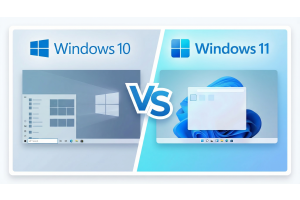
We offer a wide range of software products: Windows operating systems (7, 8, 10, 11), Office suites (2016, 2019, 2021), Windows servers, SQL Server, and many other enterprise solutions. Whatever your need, we probably have the license you're looking for.
Common Myths About Second-Hand Licenses
Despite the legal clarity, several myths about second-hand licenses persist that are important to debunk.
Myth 1: Second-Hand Licenses Are Illegal
Reality: As we have extensively explained, the sale and purchase of second-hand licenses is completely legal in the European Union since the UsedSoft vs Oracle ruling of 2012. The Court of Justice of the European Union has made this crystal clear.
Myth 2: The Software Won't Work Properly
Reality: The software you get with a second-hand license is exactly the same as you would get with a new license. You download the installer directly from Microsoft or another manufacturer, and it works identically. The only difference is the price you paid.
Myth 3: You Won't Be Entitled to Updates
Reality: As the legitimate owner of the license, you are entitled to all updates and security patches. Microsoft doesn't distinguish between new and second-hand licenses: if your key is valid, you receive support like everyone else.
Myth 4: Microsoft Can Deactivate Your License
Reality: Once you activate your license, Microsoft cannot arbitrarily deactivate it. The CJEU was clear: the second-hand buyer acquires the same rights as the original buyer. Your license is as valid as any other.
Myth 5: Only Large Companies Can Benefit
Reality: Anyone or any company can buy second-hand licenses. There are no minimum purchase requirements or special conditions. An individual who needs a single Office license has the same options as a company that needs a hundred.
Myth 6: It's a Legal Gray Area
Reality: There is no gray area. Legality is established by the highest European court and codified in Directive 2009/24/EC. Software manufacturers may not be happy with the secondary market, but they cannot legally prevent it.
Technical Aspects of License Transfer
For the more technically inclined, it is useful to understand some aspects of how software licenses work and their transfer.
Types of Microsoft Licenses
Retail Licenses (FPP - Full Packaged Product): These are the most flexible. They can be transferred between computers and users without restrictions. They are ideal for the secondary market.
OEM Licenses: These come pre-installed on new computers or are sold together with hardware. They are legally tied to the first device where they are installed. They can be sold, but the buyer must understand this limitation.
Volume Licenses (VL): Designed for companies that need many copies. They are managed through special keys (MAK or KMS). They can be sold in the secondary market, but there are specific conditions that must be met.
The Deactivation Process
When a license is sold, the original seller must deactivate it from their systems. For Microsoft software, this generally involves uninstalling the product and, in some cases, contacting Microsoft to unlink the key from the previous hardware.
A professional distributor ensures that this process has been completed before selling the license to the new owner.
Activation by the New Owner
The new owner activates the license normally: entering the product key during installation or in the software settings. The process is identical to that of a new license.
If online activation fails (for example, because the license was activated many times previously), it can be activated by phone by contacting Microsoft's activation service. This process is simple and free.
The Future of the Secondary Market
The secondary market for software licenses is here to stay, but its future presents both opportunities and challenges.
Current Trends
Software manufacturers are migrating toward subscription models (SaaS) that make resale difficult. Microsoft 365, Adobe Creative Cloud, and many other products are now only offered through subscription, not as perpetual purchases.
However, this same trend increases the value of existing perpetual licenses. Those who prefer the traditional "buy and own" model will continue to demand these licenses, and the secondary market will provide them.
Legal Developments
The legal framework established by UsedSoft vs Oracle remains solid, but manufacturers continue to seek ways to limit it. Some have tried to argue that their licenses are "services" and not "products," although courts have generally rejected these arguments.
It is important that consumers and businesses know their rights and support legitimate distributors in the secondary market. A strong secondary market benefits all software users.
Sustainability
The secondary market also has a sustainability component. Reusing software licenses is a form of circular economy applied to the digital world. Instead of letting valid licenses go to waste, they are given a second life, benefiting new users and reducing economic waste.
Practical Use Cases
To illustrate the usefulness of the secondary market, let's look at some typical use cases:
Case 1: The Tech Startup
A startup of 20 employees needs to equip their workstations with Windows 11 Pro and Office 2021. Buying new licenses would cost approximately 14,000 euros (200 euros for Windows + 500 euros for Office, per workstation). In the secondary market, they can get the same licenses for approximately 3,000-4,000 euros, freeing up capital to invest in their product.
Case 2: The Freelancer
An independent consultant needs Microsoft Office for their daily work. They don't want to pay 100 euros per year for Microsoft 365, and the free online version doesn't meet their needs. For 60-80 euros, they can buy a perpetual Office 2019 license that they will use for the next 5-10 years.
Case 3: The School
An educational center needs to upgrade their computers with Windows 10 Pro to be able to join the school network domain. With a limited budget, the secondary market allows them to obtain licenses at a fraction of the cost, stretching their budget to equip more computers.
Case 4: The Growing Company
A company of 200 employees is expanding and needs 50 new SQL Server licenses for their database. New licenses would cost more than 50,000 euros. In the secondary market, they can get SQL Server 2022 Standard licenses for a fraction of that cost, financing their growth sustainably.
Frequently Asked Questions
Is it legal to buy second-hand software licenses?
Yes, it is completely legal in the European Union. The CJEU ruling in the UsedSoft vs Oracle case (2012) established that the principle of exhaustion applies to software, allowing its legitimate resale.
Will the software work the same as if I bought a new license?
Yes, the software is exactly the same. You download it from the manufacturer's official website and it works identically. The only difference is the price.
Will I be entitled to updates and support?
Yes, as the legitimate owner of the license, you are entitled to all updates and security patches during the product's lifecycle.
Can Microsoft invalidate my license?
No, once the license is properly activated, Microsoft cannot invalidate it. Your rights as a second-hand buyer are the same as those of the original buyer.
What happens if the license doesn't work?
A reputable distributor like Licendi offers a performance guarantee. If there is any problem with activation, we will provide a replacement or refund.
Can I use second-hand licenses for commercial use?
Yes, second-hand licenses are valid for any use, including commercial and business use.
What documentation should I receive?
You should receive the product key, activation instructions, and documentation certifying the legitimate origin of the license and the transfer of rights.
Conclusion: Save Without Compromising Legality
The secondary market for software licenses is a smart, legal, and economical alternative to buying new licenses or perpetual subscriptions. Backed by the Court of Justice of the European Union and by community legislation, it offers businesses and individuals the opportunity to access professional software at accessible prices.
It is not a gray area, it is not piracy, and it is not second-rate. It is simply the market working as it should: allowing products to change hands when they are no longer needed, benefiting buyers and sellers alike.
If you're looking for software licenses for your business or personal use, we invite you to explore our catalog. At Licendi you will find Windows, Office, SQL Server licenses and many other products at prices that will allow you to save without compromising legality or quality.