EN
EN FR
FR  DE
DE  IT
IT  PT
PT  ES
ES 

How to Transfer Microsoft Licenses Step by Step
Transferring Microsoft Windows and Microsoft Office licenses from one device to another is an important task for users who are switching computers. This guide helps you avoid paying again for software you already purchased.
In this blog, we’ll explain how to transfer software licenses step by step, focusing exclusively on Microsoft products: Windows (including Retail vs OEM license types) and Office (versions linked to your Microsoft account vs those activated with a product key). This information is presented in clear language for all audiences – from individual users to professionals and small businesses – and is SEO-optimized for easy access.
Why is it important to transfer your licenses? Simple: Windows and Office licenses aren’t cheap. For example, a Windows 10/11 Home or Pro license can cost between €145 and €259, and Office even more. If you’ve already paid for them, you’ll want to make the most of them.
Below, we’ll take a detailed look at how to move your Windows 10 license to another PC, how to transfer Office 2019 to a new computer, and what conditions must be met in each case.
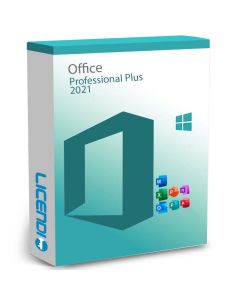 Microsoft Office 2021 Professional PlusAs low as €62.99
Types of Windows Licenses: Differences Between OEM, Retail, and Volume
Before starting the transfer process, it's essential to understand the differences between OEM and Retail Windows licenses, as well as Volume licenses. The type of license determines whether you can legally transfer it to another device or not:
OEM Licenses (Original Equipment Manufacturer)
These are the most common on brand-new factory devices (laptops and branded desktops). The key comes pre-installed and is linked to the hardware (motherboard) of the first device where it was activated. They cannot officially be transferred to another PC.
If you replace the motherboard or buy a new device, that license will no longer be valid on the new hardware. (Example: You bought a laptop that came with Windows 10 OEM; if you switch to a new laptop, the original OEM license cannot be moved because it was tied to the first machine.) OEM licenses are usually cheaper but come with this major limitation.
Note: In emergency cases (e.g., your motherboard was damaged), Microsoft may sometimes allow OEM reactivation over the phone on the new board, only if you claim hardware failure, not a voluntary PC upgrade.
Retail Licenses (also called “FPP” – Full Packaged Product)
These are purchased separately, either in physical stores, online shops, or from Microsoft’s website. They can be transferred to another PC, as long as you first deactivate them on the previous device.
A Retail license is linked to the user (or Microsoft account), not to specific hardware. You can only have it active on one device at a time, but if you switch computers, you can migrate it without issue. This is a great option if you plan to upgrade your PC in the future, as it protects your software investment.
Volume Licenses: Designed for businesses and organizations, not home users. They work with a single key that activates Windows on multiple devices (e.g., 5, 20, or more PCs depending on the agreement). They often require periodic activation against a company’s license server (KMS).
They are not intended for individual transfers because they belong to a pool of activations managed by a license administrator. Small businesses with multiple PCs sometimes choose these licenses (or enterprise subscriptions) to simplify management.
Digital Licenses Linked to Your Microsoft Account
Starting with Windows 10, many licenses (including some obtained through a free upgrade from Windows 7/8 to 10) can be linked to your Microsoft account instead of relying solely on a traditional product key. This allows you to reactivate Windows on new hardware using your account.
Important: This only works with Retail licenses and certain legitimate digital licenses. If your license is linked to your account, when switching to a new PC you can use the Windows activation troubleshooter to reactivate it on the new device (we’ll cover this later).
Suggested infographic summary: It would be helpful to include a comparative infographic OEM vs Retail vs Volume showing that OEM is tied to hardware (non-transferable), Retail to the user (transferable after deactivation on the old PC), and Volume to multiple activations (for enterprise management). This helps readers visualize the differences at a glance.
Types of Microsoft Office Licenses: Linked to Account vs Product Key
In the case of Microsoft Office, there are also different license types and activation models, which affect how they can be transferred. Here are the main categories:
Perpetual License (One-Time Purchase) Linked to Microsoft Account
These are the “traditional” Office versions that you buy once (non-subscription) and use indefinitely—for example, Office 2016, Office 2019, Office 2021 in editions like Home & Student, Home & Business, or Professional. Today, when you purchase one of these, you typically have to link it to a Microsoft account during initial activation. This means the license becomes associated with your online account.
Advantage? If you switch computers, you can install Office on the new one and sign in with your Microsoft account to activate your product without needing to re-enter the key (or in some cases, you can re-enter the same key and it will reactivate since it's linked).
These licenses are transferable to another PC you own, as long as they are installed on only one device at a time. There is a frequency limitation: Microsoft states that you can only transfer the license once every 90 days to a different device (except in cases of hardware failure, where exceptions are made). In practice, this means you can't move the installation back and forth every week, but you can migrate it occasionally without issues.
Office with Unlinked Product Key (Legacy)
Older versions like Office 2010 or 2013, or certain cases where you simply enter a product key to activate without signing in to an account. These licenses may or may not be tied to a single device depending on the terms. Generally, Retail versions of Office 2010/2013 allowed installation on a set number of devices (e.g., 1 PC), but you could transfer them by uninstalling from one and reinstalling on another (possibly requiring phone activation if online activation failed due to previous use).
If you have an Office product key that isn’t linked to an account, keep that key safe. Is it transferable? Yes, if it’s a one-time-purchase Retail license (one device at a time). You must uninstall it from the previous device and then use the same key to install it on the new one. If you get a “key used too many times” error, you may need to contact Microsoft support for manual reactivation.
Office 365 / Microsoft 365 (Subscription Linked to Account)
This is not a traditional product key, but a subscription (monthly or annual) that allows you to install Office on multiple devices. For example, Microsoft 365 Personal allows 1 user on up to 5 devices at the same time; Microsoft 365 Family allows up to 6 users, each with 5 active installations, etc. These subscriptions are tied to your Microsoft account (or your organization’s account for business plans).
Transferring in this context is easy: simply sign in with your account on the new device and download/install Office, logging out from devices you no longer use if you’ve reached the limit. In fact, from your account portal (Office.com or account.microsoft.com), you can deactivate a specific installation with one click, freeing up a “slot” to use on another device. This type of license is very flexible for device changes, as long as you stay within the allowed number of simultaneous installations.
Pre-installed or OEM Office (Special Cases)
Some new PCs come with Office pre-installed (for example, Office Home & Student “OEM” included in the purchase). These licenses are usually similar to OEM Windows licenses: non-transferable and only valid for the original machine. Unlike Retail licenses you buy separately, OEM Office licenses cannot legally be moved to another computer.
Fortunately, this model is less common today. Microsoft now prefers linking even these purchases to your account (for example, requiring you to sign in to activate Office on the new PC, thus making it a license tied to your account for that device — though generally not transferable to another).
Visual suggestion: It would be useful to include a screenshot of the Microsoft Office account page showing active installations and the “Uninstall” or “Deactivate” button for a device, illustrating how account-linked licenses are managed. Also a small visual comparing “linked to account” vs “product key only”: for instance, an image of signing into Office vs a retail Office box with a key, to highlight the difference.
How to Transfer a Windows 10/11 License to Another PC
Let’s move on to the practical process. How do you transfer your Windows 10 license to another PC? The steps are very similar for Windows 11, so this applies to both.
Remember: you can only do this if your license is Retail or a transferable digital license. If it’s OEM, you’re not authorized to move it (although we’ll briefly discuss alternative options at the end).
Before starting, make sure you have your 25-character Windows product key on hand if it's needed for activation on the new device. If you haven’t written it down, you can retrieve it before deactivating Windows (we’ll explain how below).
1. Check Your Windows License Type
First, check what kind of license your current Windows installation has. You can do this using a simple command-line tool:
- Open the Command Prompt (CMD) with administrator privileges. (In Windows 10/11, type “CMD” in the Start menu, right-click on Command Prompt, and select Run as administrator.)
- Type the command:
slmgr -dliand press Enter. - After a few seconds, a Windows Script Host window will appear showing license summary info. There you’ll see if the license is Retail or OEM (it will say something like Retail channel or OEM DM channel, etc.).
If the result says “Retail”, good news! Your license is transferable. If it says “OEM”, you won’t be able to officially move it to another PC. In that case, you can either use the new PC’s own license (if it has one) or purchase a new Retail license.
(Example: Juan ran slmgr -dli on his old PC and saw “Retail Channel” – this confirmed he could transfer Windows 10 to his new computer without issues. His friend Pedro did the same and got “OEM” – his Windows license came pre-installed and tied to the motherboard, so it couldn’t be reused.)
2. Deactivate the License on the Old PC (Release the Key)
To move a Windows Retail license to another PC, you must first deactivate it on the original device. This complies with licensing terms (no simultaneous use on two devices) and allows Microsoft’s activation servers to release the key. How do you deactivate a Windows product key using CMD? Follow these steps:
- On the old PC, open another Command Prompt as Administrator.
- Run the command:
slmgr.vbs /upk(This stands for Uninstall Product Key). - Wait a few seconds. A message should appear confirming the product key was successfully uninstalled. At this point, Windows will no longer be activated on that PC.
- (Optional but recommended) Also run:
slmgr.vbs /cpkyto clear the product key from the system registry. This prevents recovery of the key from the old PC. It doesn’t disable anything further—it just removes the key from memory.
After running these commands, restart the old PC just in case. Then check under Settings > Update & Security > Activation to confirm it now says “Windows is not activated” or prompts for activation. That means the license has been released.
Suggested screenshot: A photo of the Command Prompt showing slmgr.vbs /upk and the confirmation message “Uninstalled product key successfully” would be very helpful to visually guide users.
3. Activate Windows on the New PC
Now for the key part: transferring the license to the new PC. You have two possible scenarios for activating Windows on the new device:
- A) Manually enter the product key: This applies if you have the 25-character key. On the new PC (which should already have Windows installed, even if not activated), go to Settings > Update & Security > Activation and click Change product key. Enter your Windows key and follow the steps. With an internet connection, it should activate successfully if the key is valid and no longer in use. Alternatively, you can enter the key during OS installation if you’re reinstalling Windows from scratch.
- B) Use a digital license linked to your Microsoft account: If your old PC had the license linked to your Microsoft account (check Activation settings—if it says “Windows is activated with a digital license linked to your Microsoft account”), then on your new PC you can activate simply by signing in with the same account. After a major hardware change, Windows 10/11 might not activate automatically but offers a “Troubleshoot” option on the Activation screen. Click it, confirm that you changed hardware, sign in, and select your device from the list of licensed ones. This usually reactivates Windows without typing the key. This method is especially helpful if your old PC is no longer functional and you couldn’t run /upk; since the license is tied to your account, you can still recover it.
Once Windows is activated on the new device, verify everything is working. Go to Settings > Activation and check that it says “Windows is activated.” Done! You’ve successfully transferred your license.
Reminder: This only works legitimately with Retail licenses (or transferable digital equivalents). In the case of OEM licenses, you’ll usually need to purchase a new one for the new PC. (In practice, Microsoft sometimes “turns a blind eye” and an OEM license may activate on different hardware, but this is not guaranteed or aligned with the official terms—so we don’t recommend it as a formal method.)

How to Transfer Microsoft Office to a New Computer
Let’s now look at Office. Many individuals and businesses ask, for example, “how to move Office 2019 to a new computer” without having to buy another license. The good news is that Microsoft Office, in its non-subscription versions, typically allows transfers as long as you respect the permitted number of simultaneous activations. Unlike Windows, Office is more flexible in this regard: Microsoft sells the software with the understanding that you might upgrade your device or OS and want to take your Office with you. Still, there are recommended steps to ensure a smooth transition.
1. Check Your Office License Type and Number of Allowed Installations
As mentioned in previous sections, make sure you know whether your Office is:
- Subscription-based (Microsoft 365): in which case you have a defined number of simultaneous installations allowed (1, 5, etc., depending on your plan).
- One-time purchase (Office 2016/2019/2021 or another traditional version): typically allows only 1 PC at a time (some older editions allowed 1 PC + 1 laptop, but this changed in recent versions). Modern Home & Business or Professional licenses allow 1 active installation.
Also check whether the license is linked to your Microsoft account. You'll know this if, during the initial installation, you had to go to office.com and sign in to download Office, or if you received a confirmation email from Microsoft with the product tied to your account. If so, the transfer will be managed through your account. If you only have a printed or emailed product key from a seller, it might not be linked and you’ll use the key directly when installing on the new device.
2. Deactivate or Uninstall Office from the Old Device
Before installing Office on your new computer, remove the license from the old one:
- If it’s a Microsoft 365 subscription: log in to your Microsoft Account – Services & Subscriptions section. Find your Microsoft 365 subscription and you’ll see the list of devices where it’s installed. Click “Uninstall Office” or “Sign out” for the old computer you’re replacing. This will free up a slot for the new device. (Note: You can also simply open any Office app on the old PC, go to File > Account, and click Sign out to disconnect the license.)
- If it’s a one-time purchase (e.g., Office 2019 Home & Business): there’s no in-app “deactivate” button because only one installation is allowed. In this case, uninstall Office from the old computer via Control Panel or Settings > Apps. Additionally, if the license is linked to your account, you can go to office.com > My Account > My Products and check if you have the option to install on another device. When installing on a new one, Microsoft will automatically mark the old one as “no longer in use”. In fact, for perpetual licenses, Microsoft states that each time you activate on a new device, you must remove the software from the previous one and not keep active copies simultaneously.
Doing this ensures you comply with the rules and avoids activation conflicts. While you might sometimes skip this step and simply install on the new device (especially if the old one no longer works), it’s always best to stay within the active installation limit.
3. Install Office on Your New PC
Now let’s install Office on your new computer:
- Go to Office.com and sign in with the Microsoft account that holds the license (for Office 365 or linked Office 2016/2019). From your account dashboard, click Install Office. Download the installer and run it on your new PC. This will download and install the full suite.
- If your Office was a standalone product key not linked to an account, use whatever installation method you have: this could be a downloaded installer/ISO file or even a DVD if it’s an older version. During installation or the first launch of Word/Excel, it will prompt you for the 25-character key. Enter it to activate.
Once Office is installed:
- Sign in with your Microsoft account inside any Office app (e.g., open Word > File menu > Account > click “Sign in”) if it doesn’t do so automatically. This will confirm activation if the license is account-linked.
- If you used a product key, Office will attempt to activate online. Make sure you have an internet connection. It should activate successfully if the key isn’t in use on another PC. If an activation error appears, you may be offered the option for Phone Activation: call the number provided, follow the automated prompts to enter a code displayed by the wizard, and you’ll receive a confirmation code to activate Office on the new device. This usually happens when the key has been used before and needs verification to confirm you’re transferring rather than duplicating it.
So, what happens to the old installation? If you followed the steps, you’ve already uninstalled it or signed out, so it will no longer count as active. In Microsoft 365 licenses, you’ll see the change reflected in your account’s list of authorized devices. For one-time purchases, simply stop using the old installation.
Remember the rule: in Retail versions 2021, 2019, and 2016, you may transfer the license only once every 90 days (unless authorized by support in the case of hardware failure). This means if you reactivate it today on your new PC, don’t attempt to move it again next week—it will likely be blocked and require contacting Microsoft.
4. Special Case: Small Businesses and Office
For small businesses managing multiple Office licenses, the situation may differ slightly:
- If your business uses Microsoft 365 Business (or Office 365 Business), licenses are likely assigned to users through an admin portal. In this case, “transferring” means reassigning the license to another user or device via the admin console, and the user simply signs in on the new computer.
- If the company purchased multiple individual Retail licenses of Office (e.g., 5 keys of Office 2021 Home & Business for 5 PCs), they’ll need to be managed like described earlier: keeping a record of which key is used on which PC, and reusing that key on the replacement device when decommissioning one. It's best practice to link them to corporate Microsoft accounts to make management easier.
- If a PC came with preinstalled OEM Office (to save upfront cost), note that the license dies with the device. For a replacement, you’ll need to purchase a new license.
Visual suggestion: A flowchart summarizing the step-by-step Office transfer process would be excellent: starting with “Is your license a subscription or perpetual?” and based on the answer, showing: “Sign out/Uninstall from old device” → “Install on new device” → “Activate (sign in or enter key)” → “Done”. This helps anyone follow the correct path based on their situation.
Microsoft License Management in Small Businesses
Let’s talk more about Microsoft license management in small businesses, since this audience has specific needs for keeping their software legal and functional at the best possible cost. In a small company, it’s common to have multiple devices and perhaps a limited budget, so taking advantage of existing licenses when upgrading hardware is important. Here are some tips and scenarios:
License Inventory
Maintain a clear record of which licenses you have and what type they are. For example, write down the product keys of purchased Windows Retail licenses and note which PC they’re used on. If you buy machines with OEM Windows, mark them as non-transferable to other hardware. Do the same for Office. This inventory will help you determine which licenses can be reused when an employee receives a new PC or when replacing older equipment.
Corporate Microsoft Accounts
Consider linking Retail licenses to a corporate Microsoft account (this can be a general company account or individual employee accounts). For example, if you have 5 Retail licenses of Windows 10 Pro, you could link them to 5 Microsoft accounts belonging to your organization. This makes it easier to reactivate the license by simply signing in when switching machines or components, avoiding support calls. The same applies to Office—each Home & Business license can be linked to the Microsoft account of the employee using it. If that employee changes devices, they just need to sign in again on the new PC.
Use of Volume Licenses
Microsoft offers volume licensing programs (such as Microsoft Open License, Open Value, etc.) where you purchase a pack of licenses (e.g., 5, 10, 20) with rights to install them on that number of devices. These Windows or Office volume licenses are generally cheaper per unit and allow the company to reuse activations when a device is retired and replaced.
For example, in an environment with 10 PCs refreshed every 4 years, you could use volume licenses for Windows 11 Pro so that when a PC is decommissioned, its license returns to the pool and can be activated on the new one. Note that Windows volume licenses are typically upgrades over an existing base license (i.e., they require that the PC already have a valid license, often OEM).
For Office, volume licenses (Office Standard, Office Professional Plus under Open agreements) also allow flexible reinstallation within the agreed quantity, managed through a volume key (MAK) or an internal KMS server.
Microsoft 365 for Business
Alternatively, many small businesses choose Microsoft 365 subscriptions (Business Standard, Apps for Business, etc.). These operate based on named users rather than fixed devices. Each user can install on multiple devices, and the business pays a monthly or annual fee per user. The advantage is that changing hardware is simple: just install Office on the new device and have the user sign in. As for Windows, Microsoft 365 Business Premium includes upgrade rights to Windows 10/11 Pro/Enterprise on enrolled devices, making sure they’re always licensed without purchasing separate product keys. However, this falls into subscription models, which may not suit everyone.
Internal Policies and Training
Make sure everyone in your company understands that you cannot simply copy software from one PC to another. Explain to your team that if a computer is retired, its Windows license (if Retail) can be used on the replacement device, but that both machines cannot use the same key at the same time. The same applies to Office: if an employee gets a new laptop, they must uninstall or stop using Office on the old one. Establishing these practices helps avoid compliance issues and activation errors.
Practical Business Example
Imagine a small consulting firm with 5 employees. They had 5 old PCs, each with Windows 10 Pro Retail and Office 2019 Home & Business. When upgrading their hardware, instead of buying 5 brand-new licenses, they did the following: they verified that each Windows license was Retail (it was, since they had purchased them), used the deactivation commands on each old PC, installed Windows 10 on the new machines, and entered the same keys – all activated without issue, saving hundreds of euros.
For Office, since each employee had their Office linked to their Microsoft account, they simply installed Office 2019 on the new machines using each person’s account. When opening Word, Office was already activated (and on the Microsoft account page, the new devices replaced the old ones in the list). In the end, the company was able to reuse all their software legally and without any additional cost, thanks to proper license management.
Practical License Transfer Examples
Below are a couple of short real-life cases that illustrate what we’ve covered, with specific technical details. These examples show common user scenarios and how they were resolved step by step.
Example 1: Transferring a Windows 10 Retail License After Hardware Failure
Ana had a custom-built desktop PC on which she activated a Windows 10 Pro Retail license she purchased online. Unfortunately, the motherboard was irreparably damaged due to a power surge. Ana decided to take the opportunity to build a newer, more powerful system. Problem: How to reactivate Windows 10 Pro on the new hardware without buying a new license?
Solution: Since it was a Retail license, Ana could transfer it. Without access to the old system (because of the failure), she couldn’t run slmgr /upk. Instead, she assembled her new PC and installed Windows 10 Pro directly (skipping the key prompt during installation). Upon first boot, Windows showed as not activated. Ana went to Settings > Activation and clicked Troubleshoot. She selected the option “I recently changed hardware on this device.” After signing in with her Microsoft account—the same one previously linked to the digital license—a list appeared showing her old PC. She selected it as the device tied to the license and confirmed activation on the current PC. Within seconds, Windows showed “Windows is activated” on her new machine.
Technical detail: Ana’s Retail digital license, linked to her account, allowed her to reactivate without needing the old motherboard. If she hadn’t linked it before, she might have needed to call Microsoft support—but thankfully she had done so during the original installation.
Example 2: Moving Office 2019 to Another Computer After Upgrade
Juan is a freelance professional who uses Office 2019 Home & Business in his daily work. He bought the one-time license and installed Office 2019 on his old laptop. Later, he bought a more powerful laptop and wanted to migrate Office 2019 to it. Problem: Ensuring Office works on the new machine without violating the license.
Solution: First, Juan verified that his Office 2019 was linked to his account (it was—he could see it at Office.com). On his old laptop, he went to Control Panel > Programs and uninstalled Microsoft Office 2019 to free up the license. Then, on the new laptop, he visited the Office site and signed in. He downloaded the Office 2019 installer from the Services & Subscriptions section. After installation, he launched Word and signed in with his account: Office immediately recognized his Home & Business license and activated. All his documents and settings remained intact thanks to OneDrive.
Technical detail: Juan’s license allows only one installation, but Microsoft didn’t block it because only one active device was detected (the new laptop). Even if he hadn’t uninstalled it on the old one, activating on the new device would likely have deactivated the old one automatically (he may have been prompted to sign in again or notified of an unlicensed product). The entire process took less than an hour and didn’t cost him a cent.

Frequently Asked Questions (FAQ)
Can I transfer my Windows license to another computer?
Yes, depending on the type of license you have. If it's a Retail Windows license (purchased separately), you can transfer it to another computer that you own. You’ll need to deactivate it on the old device (for example, using slmgr.vbs /upk or by formatting the old PC) before activating it on the new one.
On the other hand, OEM licenses (those that come pre-installed on many factory PCs) cannot legally be transferred to another computer, as they are tied to the original hardware. Volume licenses can be reassigned to other machines within the same organization, following the terms of the volume agreement.
How can I know if my Office license is transferable?
You need to check the type of your Microsoft Office license. If it’s a Microsoft 365 (subscription), you don’t “transfer” the license—you simply install it on another computer by signing in, up to your allowed device limit (and you can deactivate an old device easily from your account). If it’s a perpetual license (Office 2016/2019/2021 one-time purchase), most of these are transferable to another PC you own, as long as it's installed on only one device at a time. For example, Office Home & Business 2019 can be moved to a new PC by uninstalling it from the previous one first.
A key indicator: if your license is linked to your Microsoft account (which is the case for most digital purchases nowadays), that means it’s a Retail license that can be reinstalled on another device via that account. However, if your Office came pre-installed or was bundled with your PC (OEM license), it cannot be transferred to another computer. You can always double-check your license terms in the documentation or on Microsoft’s website.
What happens if I already used my product key on another computer?
If you try to activate Windows or Office with a product key that is already in use on another active computer, the activation server will usually reject it, indicating the key has already been used or exceeded its activation limit. In that case, make sure you have deactivated or uninstalled the license from the previous computer. If you already did, online activation might still fail to recognize it (especially with Windows).
Solution: On Windows, you can use phone activation: the system will give you a phone number and codes; after confirming that the key is used on just one PC, you’ll receive an activation code. With Office, if something similar happens, launch the phone activation wizard. This validates that you are transferring—not duplicating—the license. A simpler option, if your license is linked to a Microsoft account, is to activate via your account instead of using the key directly, or manage installations from your account portal.
Lastly, if you have a subscription (like Microsoft 365) and you've reached the device limit, just deactivate one of the previous devices from your account and then sign in on the new one. Keep in mind: OEM keys cannot be reused on a second PC, so if that’s the case, the only solution is to purchase a valid new license.
In summary, transferring Windows and Office licenses is completely possible and legal in many cases—as long as you have the correct license type (mainly Retail or equivalent) and follow the proper steps. This allows you to save money and maximize the value of your software investment. We hope this step-by-step guide has been helpful. Whether you’re a home user upgrading your personal computer, a professional updating your work tools, or a small business renewing your devices, knowing these best practices will help you manage your Microsoft licenses efficiently and without hassle. Enjoy your new device with all your software running smoothly!