EN
EN FR
FR  DE
DE  IT
IT  PT
PT  ES
ES 

Difference between a digital key, a software license, and activation
In the world of software, especially when we talk about popular programs such as Microsoft Windows or Microsoft Office, it is common to come across terms like digital key, license, and activation. These concepts often cause confusion, but understanding their differences is essential to make the most of your products and avoid misunderstandings.
Have you ever wondered what each of these terms really means? Don’t worry, you’re not the only one.
In this article, we will clearly and accessibly explain what a digital key is, what a software license is, and what activation consists of. We will use practical examples focused on Windows and Office to make everything very easy to understand. By the end, you will know exactly what you are buying when you purchase software, how the digital key is applied, what implications the license has, and why carrying out activation is so important. We will also explain the advantages of digital licenses and share some useful tips for managing and activating your products correctly. Let’s get started!
It is worth mentioning that this scheme is not exclusive to Microsoft. Most commercial software—from antivirus programs to design suites or PC video games—uses licenses and keys to control their use. So, keep reading to clear up all your doubts!

What is a digital key?
A digital key is basically a unique alphanumeric code used to unlock or activate software. It is also commonly called a product key, activation code, or serial. This key usually consists of a sequence of characters—typically 25 characters grouped into blocks (for example: XXXXX-XXXXX-XXXXX-XXXXX-XXXXX) in the case of Microsoft products—and is provided when you purchase a program or operating system.
In the past, these keys were often printed on the product box or on a card. Nowadays, it is very common to receive them by email or through an online store, hence the term digital key. For example, if you purchase Windows 11 or Microsoft Office online, you will likely not receive a DVD or physical package, but only the digital key in your email. With that key, you will be able to install and activate the downloaded software.
In short, the digital key is the means that confirms you have legally obtained the software. It is the “key” that allows you to unlock the full program. Without the key, the software usually runs in trial mode or with limited functionality.
It is worth noting that each digital key is unique and generally can only be used to activate the software on the number of authorized devices (usually one, unless the license specifies more). If you try to reuse the same key on more devices than allowed, activation will not be possible or an error will occur.
It should also be clarified that a digital key does not contain the software itself; it is only the code used to enable it. You must download or install the program separately (usually from the official provider’s website) and then use the key to unlock the full version.
What is a software license?
A software license is the legal right or permission you acquire to use a program. When you purchase software (for example, Microsoft Office or Windows), what you are actually buying is a license to use it, not the physical software itself. This license is defined by the software manufacturer through a license agreement (those long terms and conditions we sometimes accept without reading, known as the EULA).
The license specifies how you can use the software: on how many devices, for how long, whether it is for personal or commercial use, etc. For example, a Microsoft Office Home license may allow you to install Office on a single PC for home use, while a Microsoft 365 business license allows multiple installations and users.
It is important to understand that the license is a concept: it is the authorization. You can obtain a license in different ways, such as by purchasing a digital key, subscribing to a service (as is the case with Microsoft 365), or buying a device that already includes the software. Without a valid license, any prolonged use of the program would be considered a violation of the terms of use (that is, unauthorized use).
Even if you purchase a PC that comes with Windows or Office preinstalled, you will not receive a printed key; nevertheless, you still have a valid license included with the device. In these cases, the license is registered at the factory (these are often OEM licenses).
There are perpetual licenses (you pay once and the permission does not expire, for example Windows 11 or Office 2021) and subscription-based licenses (you must pay periodically to maintain the right to use the software, as with Microsoft 365). But in all cases, the license remains an agreement that defines how and for how long you may use the software.
What is software activation?
Software activation is the process by which you confirm to the manufacturer that your copy of the program is legitimate and that you own a valid license. In other words, activating software means verifying the license using the key or method provided.
The activation process usually takes place after installing the program or operating system. For example, when installing Windows, the system will ask you to enter the digital key (product key). Once you do so and connect to the internet, Windows sends this information to Microsoft’s servers to check that the key is genuine and has not been used on more devices than allowed. If everything is correct, the software is activated on that PC. In products such as Office, activation can be done by entering the key in the application or by signing in with an account that has the license associated with it.
Why does activation exist?
Mainly to prevent piracy and ensure that each user has a license they have paid for. In addition, activation unlocks all the software’s features. Without activation, many programs run in a limited or trial mode, constantly reminding you that you need a license.
It is generally a quick process: with an internet connection, activation is completed in seconds. If a device is offline, some manufacturers offer alternative methods (such as phone activation using codes) to validate the license.
It is worth mentioning that in many cases you can install the software without activating it immediately (for example, Windows allows you to skip entering the key during installation). However, the program will run in trial mode or display reminders until you complete activation with a valid license.
Differences and relationship between a digital key, a license, and activation
We have already defined each term separately, but it is useful to see how they relate to each other and how they differ. We can summarize it as follows:
- Digital key (product key): This is the code you receive when you purchase the software. It represents your license in a tangible way. Think of the digital key as the unique “password” or code provided by the seller to prove that you have the right to use the program.
- Software license: This is the legal permission or right to use the software. It is a broader concept than the key. The license is the contract: it establishes that you, as the user, may use the software under certain conditions. The digital key is one way of materializing that license, but the license itself can exist even without a written code (for example, in subscriptions or digital licenses linked to an account).
- Activation: This is the procedure by which you use the key (or your account) to validate the license on a specific device. Activation links the digital key or license to your computer or account, informing the manufacturer that this copy is being used legitimately. Without activation, having the key or the license has no practical effect: the software will remain restricted.
In short, the digital key is the code, the license is the right, and activation is the action that makes that right valid on your device.
It is worth mentioning that in everyday conversations it is common to use the word “license” to refer to the digital key (for example, “I bought a Windows license” usually implies that you obtained a key). From a strict point of view, the license is the permission and the key is the code, but it is not unusual for many people to use the terms interchangeably.
Keys, licenses, and activation in Microsoft Windows (practical example)
Let’s look at a specific example with Windows. Imagine you have a computer without Windows activated and decide to purchase a Windows 11 Pro digital key. After the purchase, you receive a 25-character product key. That digital key indicates that you have acquired a Windows 11 Pro license.
What do you do with that key?
Simple: you install Windows 11 Pro on your device (or, if it is already installed, go to the Activation settings). There, you enter the digital key in the appropriate field. In Windows 10/11, this is done by going to Settings > System > Activation and clicking on “Change product key”. Once you enter the code and your PC connects to the internet, Windows verifies the key with Microsoft’s servers and the system becomes activated.
Your computer will display “Windows is activated,” which means the license has been validated correctly and your copy of Windows is genuine. If you reinstall Windows on the same device in the future, activation will be remembered automatically if it is the same edition, thanks to the fact that the license can be linked to your hardware or your Microsoft account (what Microsoft calls a digital license). On the other hand, if you try to use the same key on another device at the same time, it will not work, since a standard Windows license is for one device only.
Another scenario
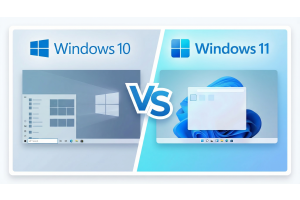
If you upgraded a PC from Windows 10 to Windows 11 during the free upgrade offer, you automatically obtained a digital license. In that case, you do not have a key to enter; Windows activates itself once the device connects to the internet, using your hardware information (and your Microsoft account if you linked it). The result is the same: the system is recognized as genuine and activated.

Keys, licenses, and activation in Microsoft Office (practical example)
The case of Microsoft Office is similar in concept, although with some practical differences. Microsoft offers Office in two formats: subscription-based (Microsoft 365) or one-time purchase (such as Office 2019, Office 2021, etc.).
If you purchase a traditional edition of Office (one-time purchase, not a subscription), you will receive a digital key for Office. For example, when buying Office Home and Student 2021, you receive a 25-character code. To activate it, you usually redeem it on the official website (office.com/setup) with your Microsoft account, or enter it during installation. After that, Office is activated on your PC and the license is limited to that device (unless you purchase another one for a second computer).
On the other hand, if you have the Microsoft 365 subscription version, you do not receive a traditional product key. Instead, the license is managed through your Microsoft account with an active subscription. Activation happens simply by signing in to Office with your subscribed account. As long as your subscription remains active, Office stays activated on your authorized devices.
Imagine you buy a digital key for Office 2021 online. You receive the code, redeem it with your Microsoft account, and download Office. When you open Word for the first time, it detects the license associated with your account and activates the product. You can now create and edit documents without limitations. If, on the other hand, you use Microsoft 365, you simply install the application, enter your username and password, and it is automatically activated thanks to your subscription (without entering any codes).
It is worth noting that perpetual Office licenses are usually valid for one device only at a time, while with a Microsoft 365 subscription you can install Office on multiple devices (depending on the plan).
What happens if I don’t activate my software?
We have mentioned that without activation the software works in a limited way, but what does that actually mean? It depends on the product:
Windows without activation
In Windows 10 and 11, Microsoft allows you to use the system without activation for an unlimited time, but with several restrictions. The most visible one is a watermark in the corner of the screen reminding you that Windows is not activated. In addition, you will not be able to personalize the appearance (you cannot change the wallpaper, themes, colors, etc.), and periodic notifications will appear prompting you to activate. Otherwise, Windows will continue to function and receive critical security updates, but you will technically be outside the license terms until you enter a valid key. In earlier versions of Windows, after a few trial days, the system could lock up or restart frequently until it was activated.
Office without activation
Microsoft Office is much more strict if you do not activate it. After installing Office 2019/2021 without entering a license, you have a few days of full use. After that short period, the suite enters reduced functionality mode. You can open existing documents to read or print them, but you will not be able to edit, create, or save new documents. Practically all editing features are blocked until you activate Office with a valid license. In the case of Microsoft 365, if you do not renew your subscription (which is a form of “deactivating” the license), you will also lose access to the full applications.
In short, not activating your software means not taking full advantage of it. You will receive constant reminders and face restricted functionality. In addition, you will be violating the license agreement, which in professional environments can lead to legal or security issues. That is why it is so important to activate your software with a legitimate license!
Types of Windows licenses
Not all Windows licenses are the same. Microsoft distributes Windows under several main license types:
OEM License (Original Equipment Manufacturer)
This is the license that comes preinstalled on new branded computers (HP, Dell, Lenovo, etc.). This license is tied to the PC’s hardware (especially the motherboard) and cannot legally be transferred to another device. It is usually cheaper for the manufacturer. For example, if you buy a laptop with Windows 11, that Windows license is typically OEM: the activation key is already embedded in the system and the license is “attached” to that PC.
Retail License
This is the license you buy separately, either in a physical store or online, as an individual product. It may come boxed with installation media and a printed key, or simply as a digital key sent by email. The advantage of Retail licenses is that they are transferable: you can activate Windows on one device and, if you later change computers, uninstall the license from the old one and use it on the new one (never on two at the same time). They are usually more expensive than OEM licenses because they offer this transfer right and direct support from Microsoft.
Volume License
These licenses are intended for companies or institutions that need to activate many devices. Instead of using individual keys per PC, they use master keys (MAK) or internal activation servers (KMS) to manage multiple activations under a single contract. These licenses are not available to typical individual users.
In any case, from the end user’s perspective, once Windows is activated with any of these licenses, the user experience is the same. The important thing is to acquire licenses from legitimate sources to ensure their validity.
Types of Microsoft Office licenses
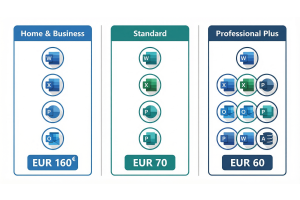
In the case of Microsoft Office (now part of the Microsoft 365 family), licenses are presented somewhat differently than with Windows. We can mainly distinguish between:
Perpetual license (one-time purchase)
This corresponds to specific versions of Office that are purchased once and used indefinitely (until the software becomes obsolete). Examples include Office 2016, Office 2019, and Office 2021. These licenses are usually valid for one device only (or sometimes a few, depending on the edition) and are activated with a digital key. You pay once and obtain the right to use that version of Office forever, although you do not receive upgrades to future major versions. The key is linked to your Microsoft account and/or the device on which it was installed.
Subscription license (Microsoft 365)
This is the modern model in which you pay a monthly or annual subscription. As long as the subscription is active, you always have the latest version of Office available and can install it on multiple devices at the same time (for example, up to 5 PCs/Macs plus tablets/phones on the Family plan). There is no “key” to enter each time; instead, activation is carried out by signing in with your subscriber account. If you stop paying the subscription, the license expires and Office switches to read-only mode until you renew it.
In addition to these, there are special licenses for students, educational institutions, or business editions with additional features, but essentially they are based on either one-time purchase or subscription. For the average user, choosing between these options depends on whether they prefer to pay once for a fixed version or pay regularly to always stay up to date and have multiple installations available.
Advantages of digital keys
Why do so many people choose to buy digital keys instead of boxed physical versions or preinstalled products?
These are some of the main advantages of purchasing licenses in digital format:
Lower price
Digital keys are usually more affordable than boxed versions. Since there are no manufacturing, packaging, or physical distribution costs, sellers can offer them at a more competitive price. It is still original software, but at a lower cost for the user.
Instant delivery
Forget about waiting days or weeks. When you buy a digital key, you usually receive it by email immediately. You can download the software from the official website (for example, Microsoft’s site) and enter the key to activate it. This is ideal if you need to start using the program right away.
Convenience and ease
The entire process happens online. You can buy from home, receive the key in your email, and install the software without going anywhere. Also, you do not have to store or take care of physical discs; you can always download the program again whenever you need it from official sources.
Just as official and secure
A license obtained via a digital key is 100% legitimate, as long as you purchase it from trusted distributors. It uses the same activation system provided by the manufacturer. For example, if you buy a Windows digital key, you will activate your system against Microsoft’s official servers, receiving the same updates as any legitimate user.
More options
Digital license stores usually offer a wide range of software products and versions. You can find everything from the latest programs to older editions that are no longer sold in physical boxes—all just a click away.
Remember that in our Licendi store you can buy official Windows, Office, and other software licenses quickly and securely, taking advantage of all these benefits of digital keys.
Tips for activating and managing your licenses
To wrap up, here are some useful tips that will help you better manage your software keys, licenses, and activations:
- Store your keys in a safe place: Once you buy a digital key, write it down or keep it in a protected file. If you received it by email, archive that message. That way, if you need to reinstall the program later, you will have the key handy.
- Link the license to your account whenever possible: Services like Windows or Office allow you to tie the license to a Microsoft account. Do it, because it makes it easier to recover if you change devices or reinstall the system. For example, in Windows 10/11 it is a good idea to sign in with your Microsoft account so the digital license is linked to your profile.
- Do not share your key with third parties: It may sound obvious, but your key is your license. If you share it and someone else uses it, you may be unable to activate your product (the key could be flagged as duplicated on the servers). Keep your licenses for personal use unless they are specifically designed for multiple users.
- Always buy from trusted sources: Purchase your licenses and digital keys from reputable stores or official websites. Avoid “too good to be true” deals from questionable sites, as you could end up with an invalid key—or worse, compromise your device’s security.
- Verify activation: Check that the software indicates it is activated. In Windows you can see it under Settings > System > Activation; in Office, in the Account section (inside Word, Excel, etc.). This confirms everything has been registered correctly.
By following these tips, you will make sure you get 100% out of your licenses, avoid setbacks, and enjoy your software legally and securely.
Frequently asked questions
Can I use my Windows key on more than one computer?
It depends on the type of license. If it is a Retail license (purchased separately), you can move it to another PC as long as you deactivate or uninstall it from the first one (it can only be active on one at a time). OEM keys, on the other hand, are tied to the first device where they are activated and cannot be transferred to another computer. So the same key will not work on two PCs simultaneously.
What should I do if my product key doesn’t work?
First, make sure you are entering it correctly (without mixing up numbers and letters, such as 0 and O, 8 and B, etc.) and that it matches the correct edition of the software (for example, a Windows Pro key will not activate Windows Home). If it still does not work, contact the provider or store where you bought it to request help or a replacement. Reputable stores provide support in case of defective keys or activation issues. You can also contact the manufacturer’s support (Microsoft or others) and provide the details of your license.
Is it safe to buy very cheap licenses online?
Some websites offer keys at extremely low prices, which naturally raises suspicion. Some may come from legitimate sources (for example, surplus volume licenses legally resold in Europe) and work without issue, while others may be fraudulent or violate the terms of use. To stay safe, buy from well-known online stores or official partners that offer a guarantee. Be wary of excessively low prices from unknown sellers, as you could end up with a key that becomes invalid over time. Remember that cheap can become expensive if the license stops working, is not legal, or could even expose you to malware.
Conclusion
Ultimately, understanding the difference between a digital key, a software license, and activation helps us navigate the software world more safely and easily. Now we know that the digital key is the unique code we receive when we buy, the license is the legal right of use we acquire, and activation is the necessary step to validate that license on our device.
Having these concepts clear allows you to buy and install your programs with confidence, knowing exactly what you are getting. It also highlights the importance of always using legitimate channels: an officially purchased key will ensure your software works smoothly, receives updates, and complies with the terms of use.
Whether you are setting up a new PC with Windows or installing Microsoft Office on your work computer, remembering these three elements will help you avoid confusion. Buying the license (getting the key) and activating the product are basic steps to enjoy your software 100%. With this information, you are ready to do it like an informed user and get the most out of your digital tools.